

Why do birds open their mouths? It is so much more than just eating……
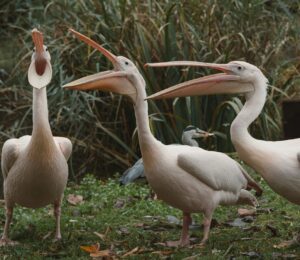
Two days ago, our heat index hit 115°F. Miserable does not even begin to describe how awful it was outside. When it is that hot and humid, birds become very quiet. They sit in shady places – where they might catch a breeze or two – and occasionally pant. Here are photos of birds who are panting. Notice their relaxed bodies. None are scraping their tummies on the ground in a submissive behavior. None have their necks outstretched in an aggressive manner. Their beaks are straight out or pointed down – none are pointed towards the sky. These are all indications that these birds are panting:
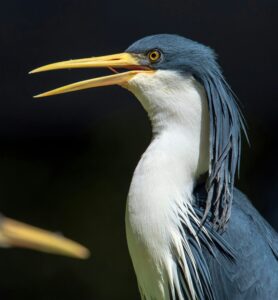
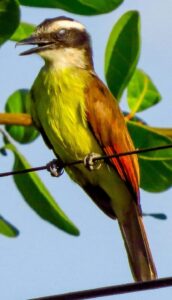
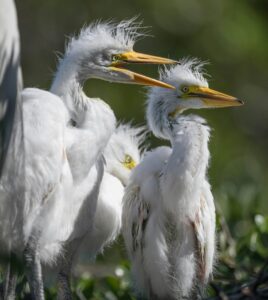
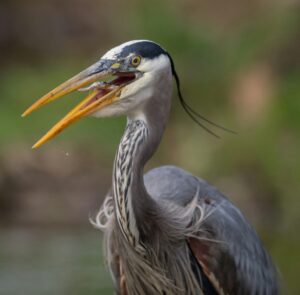
On a hot, or hot and humid, day, when you see birds sitting quietly with relaxed bodies, open beaks, and they are not engaging another bird, most often they are panting. This is an indication the bird is overheated and panting is their attempt to regulate their body temperature. Birds lack sweat glands and panting is their primary method for cooling off a bit. This is called thermoregulation. Panting causes the moisture in their air sacs and respiratory tracts to evaporate – called evaporative cooling. A bird not only opens its beak, but it also rapidly moves its throat. If you see a bird doing what you think is panting and can get a good look through your binoculars, you might see the throat feathers quivering – just like they often do when a bird is singing. The difference is posture. A singing bird most often holds its body erect and will often tip its beak up – towards the sky. A panting bird has a more relaxed body, and its beak is most often pointing straight out or down – not tipped toward the sky. Panting is normal behavior for birds on hot and hot and humid days. This is one of the reasons bird baths* are helpful – bathing also helps birds keep cool.
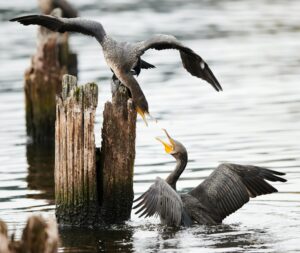
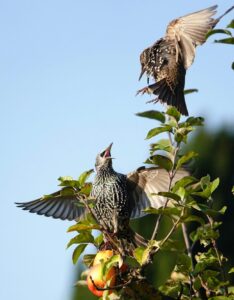
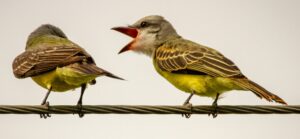
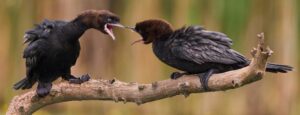
Birds open their beaks for other reasons besides panting. Juveniles open their beaks when they see their parents – this is part of begging for food. Birds can open and shut their beaks – often with a clicking or snapping noise – when either defending their spot or aggressively trying to take a spot from another bird. Birds often open their beaks as part of their mating rituals or as a greeting to a mate which reinforces the pair bond. Just like we humans do. When my husband, Cleon, comes home after being away the entire day, he greets me with a hug and a kiss and that strengthens/reinforces our pair bond. When in flocks, birds will open their beaks to make sounds other than singing in order to communicate with other members of the flock or group. And of course they open their beaks to sing.
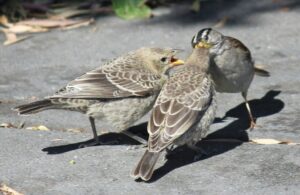
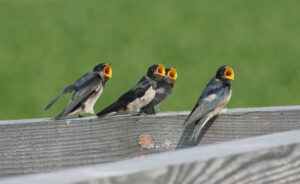
There are other body clues that will help you decide what a bird is actually doing when it opens its beak. Here are photos of juveniles begging for food. Look at their body positions. Just having an open beak does not signal begging behavior – the entire body will be involved:
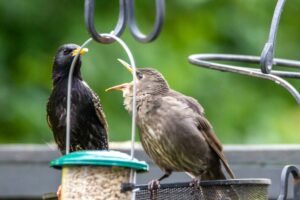
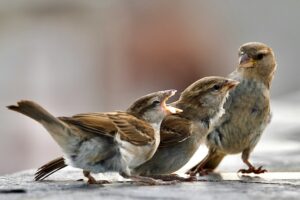
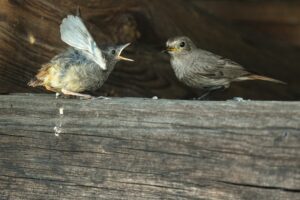
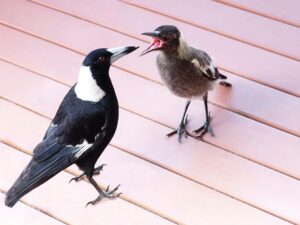
When juveniles want their parents to feed them, they assume a submissive position. They hunker down so their tummies are either touching the ground or very close to it. They retract their necks, often flutter their wings, often fluff out their feathers, often tilt their heads upward, and always open their beaks WIDE. Interestingly, this is both submissive and aggressive. Their behavior and positions of their bodies are all submissive. But they often follow their parents around in a very aggressive manner – they hound them. They will not let them alone. And often this behavior is accompanied by loud sounds – Blue Jay juveniles are real screamers. And this is a tug of war. The juveniles want fed NOW by their parents – they do not want to search out their own food. And the parents instinctively know that the juveniles MUST begin to get their own food in order to survive as adults. Does any of this sound familiar?
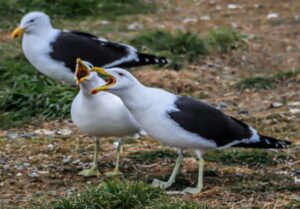
Birds often open and shut their beaks when being aggressive:
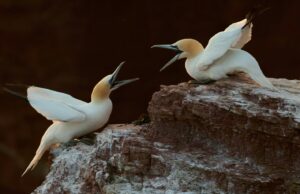
Opening beaks as part of a mating ritual or reinforcing the pair bond:
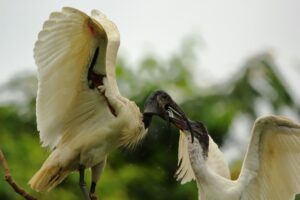
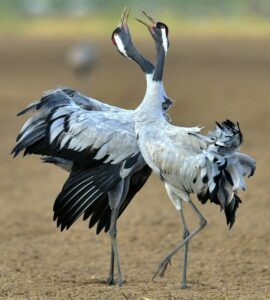
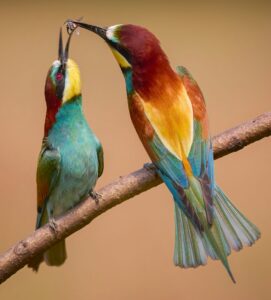
Communication with each other – you can observe this more easily when birds are in flocks – or groups:
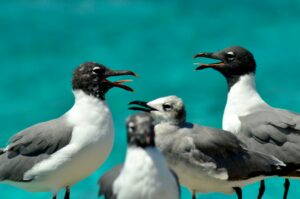
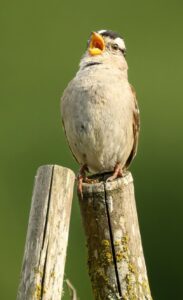
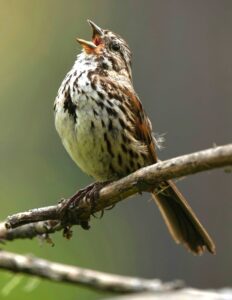
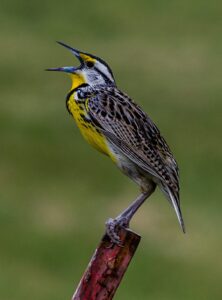
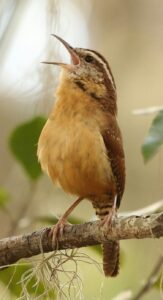
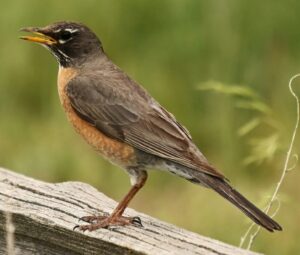
And last but not least, birds open their mouths when singing. Many tilt their heads up which opens the throat so they can really belt out that song! Notice that when singing, the body is held straight up and more stiffly. We do that, too. When you are playing your favorite song and singing in the shower – or when washing dishes as Cleon does – notice your own body posture. You are most likely more upright and stiff – possibly your head is straight or looking up. Singing birds are most often on prominent perches – they sing to advertise themselves or their territory. We human beings who are not professional singers, generally do our singing when we are hidden – behind closed doors, in the car alone, in the shower. But in our minds – aren’t we belting out our favorite song in public to a huge number of cheering fans? Just like these birds. Opening their beaks and singing and singing to anyone or anything within earshot!
To summarize, why do birds open their beaks?
Juveniles begging their parents for food:
Aggression. Defense:
Mating ritual or reinforcing a pair bond:
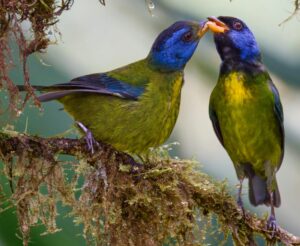
Communication within the flock or group:
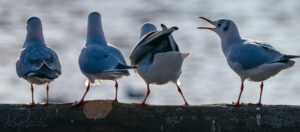
Best of all – singing!
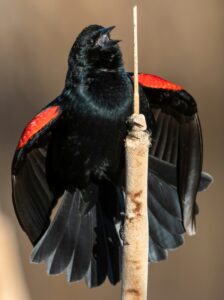
And on hot, sunny days birds open their beaks to pant – remember, they do not have sweat glands and so this is one of the few ways they have to cool themselves.
Happy Birding! Linda
P.S. Cleon was finally able to finish his squirrel tower. You can see it on the back left of the bird feeder livestream. He did make it primarily for the squirrels, but I am also hoping some of the birds will peck on the cobs. I am watching for Blue Jays and Mourning Doves. If we get inundated with Common Grackles and European Starlings as we approach fall, we may remove the corn cobs during the day for a few weeks. We are fortunate in that we do not have grackles and starlings all the time – their flocks are here in September and October. So, this is an experiment. We also have raccoons …….. not sure how this will all work out. More on our raccoons next week!
I have added Golden Alexanders (Zizia aurea) to the Landscaping and Gardening for Birds and wildlife section of this website. Here is the link: Golden Alexanders (Zizia aurea)
*If you live in an area that is plagued with mosquitoes in summer – we do! – here are some tips for bird baths. Scroll through the information on bird feeders until you come to bird baths: Bird Baths and Mosquitoes