

Responsible logging. It can be done!
For the last few weeks, I have devoted this blog to giving you links to Presidential Orders, Executive Orders, Fact Sheets, and press releases from President Trump, The Environmental Protection Agency, the Department of Interior, The Bureau of Land Management, and The US Fish & Wildlife – all from federal government websites. And I related all of these documents to what is happening right now on our public lands most especially concerning birds. And I only scratched the surface. I have added a section to the website menu – click on this link to take you right to this part of my website: President Trump’s Executive Orders, Presidential Orders, and Fact Sheets Pertaining to Wildlife and Their Habitats. I have listed – with links – all the documents I referenced in my blogs and some are included I did not use but that are pertinent to the use of our federal lands by developers, mining companies, oil companies, data centers, and people whose actions will completely change or destroy habitats on a large scale.
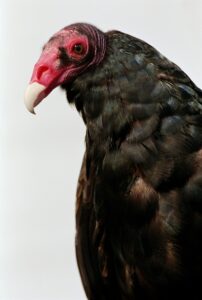
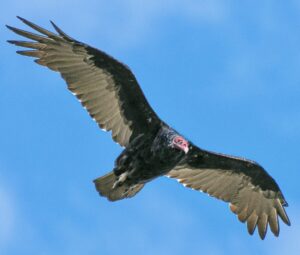
As I wrote two weeks ago, Cleon and I have been travelling. Not far as he has a partially torn meniscus in his left knee – therapy to begin 11/1. But with a cane – and two if there is some distance involved – he gets around quite well. We were able to meet our longtime very good friends Kay and Earl from Pennsylvania – first in the Hoosier National Forest where we stayed in West Baden, IN, and then we spent time in Louisville, KY. If you ever want to observe Turkey Vultures, the skies above the Hoosier National Forest teem with them. We have been to West Baden and French Lick many times and I am never disappointed. These vultures are soaring everywhere. Beautiful birds – in a very homely way!
Earl and Cleon were great fans of Major League Baseball when they were kids – Earl still is. Earl spent his childhood in Fleetwood, PA and was a devoted Philadelphia Phillies fan. Cleon spent his childhood in Red Lion, PA and was a devoted Baltimore Orioles fan. Both were boys in the late 1940’s and 50’s so picture them with their small transistor radios glued to to their ears and under the covers way past their bedtimes listening to the games.
The first stop we made after arriving in Louisville and checking into our hotel was to the Louisville Slugger Museum which is where many MLB bats are still made. We took the tour and had a simply wonderful time. If you are a baseball fan – if you played when you were a kid – this is the place for you. You actually get to see where the bats are made – see the work being done. Our guide was excellent and there are videos explaining everything. What an experience!
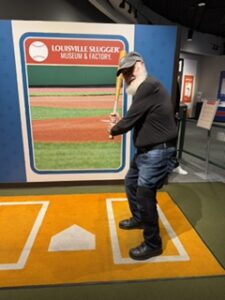
One of the best parts of the tour is everyone gets a chance to touch the actual bats that many of our baseball heroes used – Babe Ruth, Lou Gehrig, Micky Mantle are only just a few. (As a devoted Baltimore Orioles fan, Cleon HATED the NY Yankees and most especially Mickey Mantle. It was only as an adult that he came to appreciate Mantle and those other great Yankee players like Yogi Berra, Whitey Ford, and Roger Marris.) There is a place in the museum where you can pick from dozens and dozens of retired players’ bats and have room to give them a good swing or two. Cleon chose Cal Ripken, Jr’s bat – Cleon has long admired his sheer physical ability to play the game at such a high level for so long. And of course – he was a Baltimore Oriole! Old loyalties never die!
So why am I blogging about this? Because these are all wooden bats. Wooden. From trees. MLB uses only wooden bats. And there is a debate amongst baseball lovers over wooden bats vs metal bats – there are real differences. The most obvious to watchers of the game is the sound. The crack or thwack the ball makes coming off a wooden bat is very different from the ping it makes when it comes off a metal bat. And to fans – that makes a big difference. I played softball when I was a child with a wooden bat and in a playground league when I was in my teens with a metal bat and I think all players will agree – there are big differences. For me? I love a wooden bat. Not all players will agree. College players use metal bats in all their games. Wooden bats have not been banned by the NCAA, but college players hardly ever use them. They prefer metal bats.
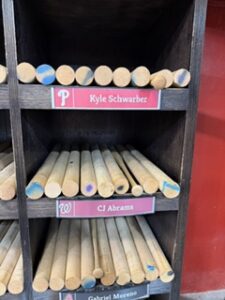
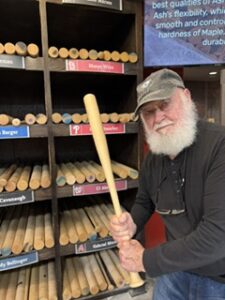
Back to MLB wooden bats. Because of the emerald ash tree borer’s destruction of the once prolific ash trees in the eastern forests of the US, in 2021, 87% of the league switched to maple bats. And in a few cases – generally for specific conditions – the players use birch bats. Here are a few of the players that do:
Bryce Harper of the Philadelphia Phillies.
2026: 89 hits, 20HRs, 57RBIs and 59 runs scored. .260 batting average. He used his first birch bat in a game against the New York Mets. One of his normal maple bats weighs 31.5 ounces. The birch bat weighs 35 ounces. He had been swinging it to warm up, he used it in practice, and so he decided to use it in this game. He homered in the first inning, had a double and a single in the third, then tripled in the fifth. The Phillies won 15-3.
Shoshei Ohtani, pitcher and hitter for the LA Dodgers.
2026: 144 Hits, 30 HRs, 81 RBI’s, 89 runs scored. .275 batting average. I read many of his interviews and he has never said why or when he chooses to use a birch bat, but he is on record – he does.
Adolis Garcia, right fielder for the Philadelphia Phillies.
2026: 45 hits, 7 HRs, 21 RBIs, 21 runs scored. .195 batting average. He has been quoted as saying he likes his birch bats because of their balance and power potential.
Yordan Alvarez, designated hitter for the Houston Astros.
2026: 179 Hits, 42 HR’s, 106 RBI’s, 105 runs scored. .316 batting average. He has been quoted that he uses a birch bat in selected games for its “whip” feel.
Here are some interesting other interesting facts about hitters and their bats. Ash? Maple?:
2001 – Ichiro Suzuki, right fielder who played most of his career for the Seattle Mariners. He won the ALMVP with 242 hits. Here are his lifetime stats: 3089 Hits, 117 HR’s, 780 RBI’s, 1420 runs scored. .311 batting average. He used ash bats for his entire career.
2002 – Barry Bonds, left fielder for the San Francisco Giants, broke the single season home run record with a maple bat – 73*. His lifetime stats were 137 Hits*, 762 HRs*, 1996 RBI’s*, 2227 runs scored*. .298 batting average*. Bonds used ash bats from the beginning of his career until the mid 1990’s when he switched to all maple bats. He was one of the first MLB payers to use maple bats.
Derek Jeter – New York Yankees shortstop – is one of the members of the 3000 hits club and he used an ash Louisville Slugger. He never veered from the exact same Louisville Slugger model his entire career. His lifetime stats were: 3465 Hits, 260 HRs, 1311 RBI’s, 1923 runs scored. .310 batting average.
Aaron Judge – New York Yankees right fielder – has used a maple bat since 2017. He only played 66 games this year because of injuries, so these are his stats from 2025: 179 hits, 53 HR’s, 114 RBI’s, 137 runs scored. .331 batting average.
All wooden bats come from trees – of course they do – we all know that. Trees that have to be cut down – logged. And here we get to the issues of clear-cutting, access roads into deep forests, and habitat destruction – all which affects birds and every living creature and plant in the area. The wildlife is all displaced – many to their deaths – and all plants are destroyed. So how does Louisville Slugger handle this? How do they get the wood they need for all these bats?
And how many bats are we talking about? Louisville Slugger is the third biggest producer of MLB bats and they make 1.8 million bats every year. Each MLB player orders up to about 120 bats each year. It is estimated that together, all the companies that make bats cut down 1.5 million trees each year – both for the MLB and all their other customers. Each tree can produce up to about 40 bats.
From the beginning – in the 1880’s – Louisville Slugger has always gotten its wood in the same way. The company that produced Louisville Sluggers was first called Hillerich & Bradsby, but hardly anyone ever called the company by that name. It was known for its most popular product – the Louisville Slugger bat. In 2015, the company became part of Wilson Sporting Goods. Regardless of management/ownership change, how the wood is procured has never changed.
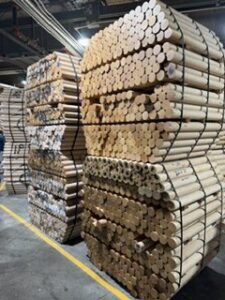
All the wood for these bats comes from woodlands on the Pennsylvania/New York border – mainly in Warren and Potter Counties in Pennsylvania. These woodlands and the lumber mills that make the wooden cylinders are owned by Larimer & Norton. The sawmills are in Galton and Akeley which are both in Pennsylvania. This area is quite rural – mountainous and wooded. It is part of the geologic area called the Appalachian Plateau which is within the Appalachian Mountain system. It also includes some areas of the Allegheny National Forest. Small towns. Many of the people living there are in some way connected to Louisville Slugger bats.
Foresters from Louisville Slugger and the lumber mills walk these woods looking for maple or birch trees about 60 years old with straight trunks. The chosen trees are marked and individually harvested. There is no clear cutting. They replant where needed. If you walk through these areas after trees are cut to make the bats, the forest will seem to be intact. The habitat not much disturbed.
Bats used to be made from ash trees, but ash trees are now in steep decline – suffering the same fate as the American Chestnut. For the ash tree, this has been caused by the emerald ash borer which was accidently brought here from Asia by people and has destroyed almost all the ash trees. Now most bats are made from maple or birch wood.
Trees used for bats have been taken from these woods since the late 1880’s, people living in and around these vast woodlands and forests have jobs related to these bats, and the woodlands and forest remain mostly undisturbed. What a wonderful example of management! People get the wood they need yet the habitats for plants, animals, insects, fungi, lichens – all the things that grow in the woods – remains generally intact – mostly undisturbed.
I have included a link to a website at the bottom of this blog that will tell you what bats the pros in MLB use and there are 4 other major companies besides Louisville slugger that produce wooden bats: Victus – King of Prussia, PA; Marucci – Baton Rouge, LA; Chandler – Port St. Lucie, FL; and Old Hickory – 20 miles north of Nashville, TN.
How and from where do these companies get their wood:
Victus. They get their wood from certified sustainable forests primarily in New York and Pennsylvania. I assume that means they are replanting where they harvest. But no other information was available. In fact, it is stated this information is not public. Are they clearcutting? Building many access roads? My guess is no, but that is just a guess.
Marucci. They get most of their wood from forests in Pennsylvania. No information is available as to how.
Chandler. They get their wood from forests in New York and Pennsylvania, but there is no information as to how.
Old Hickory. They get their wood from forests in the northeastern US and Canada. Like Louisville Slugger, they also hand-pick their trees, but no other information is available.
Only Louisville Slugger is right up front with where and how they obtain their wood. If you take their museum tour, you will see a video that shows how all this is accomplished. It could be the other companies do not think the public would be interested in how their wood is harvested? I am certainly interested.
Why is this important – that these companies take care of the woodlands and forests where they are harvesting trees? Because there are once common woodland birds whose populations are in decline. These birds need intact, unfragmented woodlands and forests in which to live, nest, and raise their young. By sustaining these woodlands and forests – not clearcutting, fragmenting, or cutting in numerous access roads – these companies are giving these birds a helping hand. I say thank you to all of them – most particularly Louisville Slugger who is open and public about their tree harvesting practices.
Here are some of the woodland birds in these northeastern forests and woodlands who were once common but now their populations are in decline. The exception is the American Goshawk**** which was never a common bird. I have included a link after each bird for photos.
Golden-Winged Warbler – Golden-winged Warbler photos. This bird is on Yellow Alert Status** – and moving towards its tipping point*** (State of the Birds***). If you look at the range map in your field guide, you will see that the woodlands and forests where harvesting of trees for baseball bats occurs, is part of its range. That these forests and woodlands appear to be carefully managed – at least by Louisville Slugger – will help these birds.
Wood Thrush – Wood Thrush photos. This bird is in the same classification as the Golden-winged Warbler – Yellow Alert Status. If you look at the range map in your field guide, you will see that the woodlands and forests where harvesting of trees for baseball bats occurs, is part of its range. That these forests and woodlands appear to be carefully managed – at least by Louisville Slugger – will help these birds.
Red-headed Woodpecker – Red-headed Woodpecker. This woodpecker has lost 54% of its population since the 1960’s and in some areas, it is still in decline. If you look at the range map in your field guide, you will see that the woodlands and forests where harvesting of trees for baseball bats occurs, is part of its range. That these forests and woodlands appear to be carefully managed – at least by Louisville Slugger – will help these birds.
Swainson’s Thrush – Swainson’s Thrush. Globally, the population of this bird is fairly stable. However, it is in a steady decline in the forests and woodlands of our northeastern and middle Atlantic states. If you look at the range map in your field guide, you will see that the woodlands and forests where harvesting of trees for baseball bats occurs, is part of its range. That these forests and woodlands appear to be carefully managed – at least by Louisville Slugger – will help these birds.
American Goshawk**** – American Goshawk photos. This goshawk was never a common bird anywhere in the US or Canada. However, it has been observed by experts this bird’s population is most likely in decline.
‘Northern Goshawk’ had two subspecies – the American and the Eurasian. In 2023, the AOS declared each of the subspecies to be a separate species – hence the name change. Together those now two separate species total about 420,000 birds. It appears the population may be holding fairly steady, but no one is sure. The American Goshawk may be in decline. And if that now separate species population is about half of the total of the former species which included both, then their total population could be in the range of about 200,000 birds. Considering we have anywhere from about 85 million to about 200 million European Starlings in the US alone, 200,000 birds is a small population.
According to the Cornell Laboratory of Ornithology, the American Goshawk is on the US Forest Service’s Sensitive Species List which requires that all proposed management activities – including logging – must consider impacts on goshawks*****. It is my opinion that the many Executive Orders and Presidential Orders from President Trump have either seriously weakened this requirement or eliminated it. To read these papers from the president in their entirety, here is a link: President Trump’s Executive Orders, Presidential Orders, and Fact Sheets Pertaining to Wildlife and Their Habitats
Louisville Slugger – and any other company that harvests trees as this company does – should be thanked. Too often, companies try to sidestep regulations – or simply ignore them. Habitats can be damaged or destroyed before we are even aware it is happening. Louisville Slugger has been responsibly harvesting trees and taking care of the forests and woodlands it owns and uses since the late 1800’s. Good for them! I know an argument can be made for clear cutting by pointing out how cost effective it is when huge amounts of wood are needed, but maybe we have to ask ourselves – how much more are we willing to pay for wood that is more carefully harvested? These companies are doing it with 1.5 million trees harvested each year – that’s a lot of trees. We are an intelligent and innovative species – it can be done. It may take much thought and effort on the parts of those in charge, but it can be done.
Happy birding! Linda
________________________________________
*This asterisks are mine – not MLB’s. I think asterisks should be behind his name and his records because there are serious and legitimate questions about performance drugs. One of the famous quotes about Babe Ruth was that he set all his records on hot dogs and beer. No one disputes that. For me, Hank Aaron is still the home run king. This is not the stance of MLB or many of its fans. This is my opinion.
**Yellow Alert – Birds who have lost 50% of their population over the past 50 years, but in the past 10 years, their population has stabilized.
***Tipping Point – from biologyinsights.com: In ecology, a tipping point for a species is a critical threshold of environmental conditions or stressors beyond which the species’ population undergoes a sudden, often irreversible, shift in its state. This can mean a rapid decline in numbers, a change in distribution, or a collapse of the species’ ecological role, even if the underlying pressures are only gradually increasing. For a species, a tipping point occurs when the balance between its ability to recover from disturbances and the intensity of those disturbances is breached. Before this threshold, the species may persist through fluctuations, but once the threshold is crossed, positive feedback loops or cascading effects can accelerate the change, making recovery difficult or impossible.
State of the Birds – What is the State of the Birds?
****The American Goshawk was formerly named the Northern Goshawk. The AOS changed the name in 2023. What is the AOS? The American Ornithological Society
*****Northern Goshawk suspected decline – US Dept of Ag – Forest Service. This was printed in 2006 before the name change. This bird is now called American Goshawk.