

American Cranberrybush Viburnum (Viburnum trilobum)
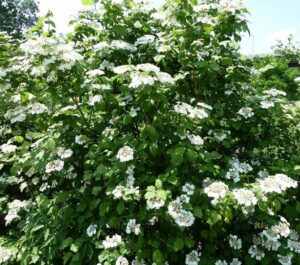
American Cranberrybush is native in many of our northern states.
Light: Sun to part sun.
Soil and water: Good garden soil that is moist, but well-drained. I recommend mulching the area around the bush. Mulching helps keeps the soil at an even temperature and moistness.
Hardiness Zone: Zones 2-7.
Size: 8-12 ft. tall and wide. I have 2 in my yard and both are between 10 and 11 feet tall and about 8-9 ft. wide so this is a big shrub. It is a substantial presence in your yard.
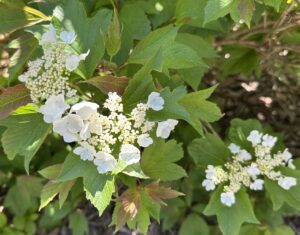
Bloom period and color. Deadheading: Blooms white in May. I think these flowers are beautiful – lace-caps. No deadheading is needed. This bush will take care of itself. After flowering, the bush will produce bright red berries in September. Generally, birds will eat almost all of them, but if a few are left, they generally last until February when they will fall off the bush naturally. You can also eat these berries cooked in preserves or jellies, but my advice is to leave them for the birds. It takes a boat-load of sugar to make these berries into good preserves and jellies – and let’s be honest. Way more sugar than is good for us. But these berries are attractive, birds like them, and these bushes will look good all fall and early winter.
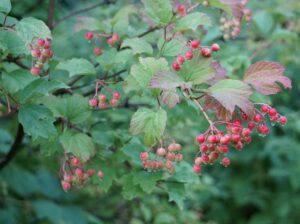
Butterflies and birds: Birds like the berries. They will also nest in a full-grown bush – especially if it is planted with shrubs of its size. We have two in our long shrub border separating our house from our neighbor’s and Gray Catbirds always nest in them. Our Brown Thrashers forage underneath them. Any birds that nest in large shrubs will nest in these.
Deer, rabbits, and other pests: I have never had deer, rabbits, or disease damage. The only setback was when we had a terrible storm with straight-line winds that uprooted 9 of our huge hickory and oak trees and a tree fell on one of the viburnums and pretty much flattened it. I removed all the broken branches and by the next year it was repairing itself by putting out all new growth. It looked a bit unsightly and lopsided for about two years, but three years later, it looked great. It once again, had a wonderful shape and it flowered well. It lost a few years of height but was catching up. This is truly a good grower – a plant that wants to live and thrive in your garden. You have to love that!
This is uncommon, but there are a few insects that can bother these shrubs: aphids, spider mites, and viburnum leaf beetles. Take a look at your shrubs every 2 weeks in spring and summer and check for damage. If you have some, follow the directions on the label and spray with insecticidal soap. If there are a few heavily damage areas, these branches can be pruned off. The best prevention is to spray your viburnums with horticultural dormant oil before they leaf out – March-early April. Again, follow the directions on the label. This oil is nontoxic to plants and works by smothering overwintering insect eggs. It is estimated that at least 75-80% of the eggs will be destroyed.
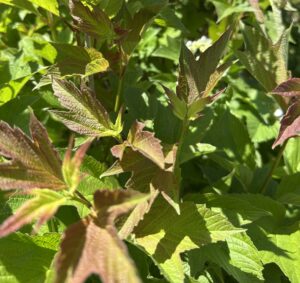
What to plant with American Cranberrybush Viburnum: This is a lovely big shrub that goes well with other large shrubs: Nine-bark, Elderberry, all the other Viburnums, Sand Cherry, and Weigelas are just a few examples. And smaller shrubs can be placed in front: smaller Spireas, St. Johnswort, Butterfly Bushes, Blueberry Bushes, and all the Clethras (Summersweet) are a few examples. I also have Witch-hazel very close to my largest American Cranberrybush and it looks great – they are about the same size.
How to use the American Cranberrybush: Remember, this is a big bush – it needs plenty of room to spread out both in height and width. If you have the room, I think this is one of the finest shrubs available for homeowners. We have one of ours as part of our shrub border that separates our neighbor’s property from ours and one as a focal point in the back of a large garden of native roses (Rosa rugosa), St, Johnswort, Summer Sunflower (Heliopsis – a perennial), and Comfrey – and yes, adding Comfrey is thinking outside the box and it looks great. Just make sure this shrub has room and it will go anywhere. The only thing I caution you about is do not try to force this shrub to fit into a small area – it just will not grow well or look good. Keep its size in mind, give it room, and you will love it!