
What is going on around here? And I have heard from some of you! Part 5
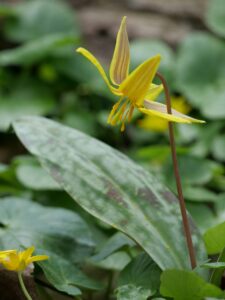
Spring! Every day it is something new! New plants breaking ground, spring ephemerals coming – and sadly going till next year, glorious spring flowers such as lilacs and irises. Birds leaving and arriving.
Our juncos left last week. We have not seen the White-throated Sparrows for two days so maybe they have also left? One White-crowned Sparrow was still here yesterday afternoon foraging in the grass – maybe filling its belly for the long flight north?
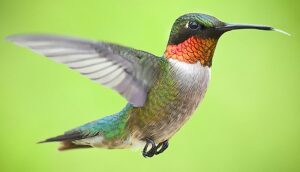
I saw our first male Ruby-throated Hummingbird last evening at dusk sitting on the feeder at the large bird bath. And he drank and drank and drank – sat there for almost 4 minutes which has to be getting close to a hummingbird record as they are not birds that sit still for long. My guess is he just arrived from a long migration flight and was famished/thirsty. And the birdbath and oriole feeder were deserted so he had the whole area to himself.
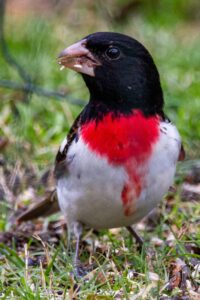
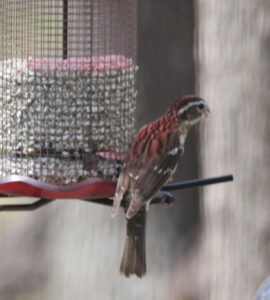
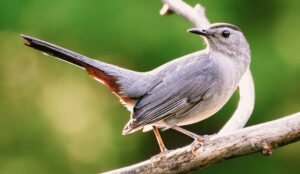
The Gray Catbirds have arrived and are starting to use the oriole feeder. We have at least 4 singing Baltimore Oriole males in ours and our neighbor’s trees. Cleon built a fire for us last night and we sat on our patio just listening to the orioles singing at dusk. Life just not get better than this! No sign of any females, but they should arrive this coming week for sure. And we also have 4 singing male Rose-breasted Grosbeaks – all in our backyard and they are emptying the safflower feeder at their usual remarkable pace. Cleon and I are always amazed how much they eat – and yet still fly away. We did see one female on the platform feeder.
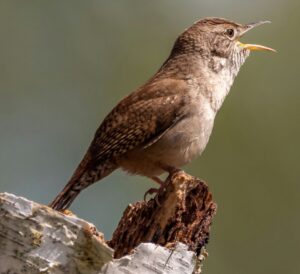
The only missing birds from our usual spring and summer residents are the Northern House Wrens. We have a pottery nesting jar for them on the north side of the house and a pair raised 2 broods in there last year. I cleaned it all out, so it is ready for them.
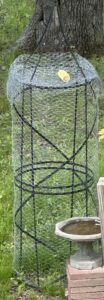
To answer the question some of you have asked in email? What is that tower on the left of the bird feeder livestream? That is Cleon’s squirrel tower. This tower was in our front garden and supported Maximillian sunflowers – a native plant in Illinois. But the plant never thrived at the tower. However, it did spread into areas where it is unwanted. So, I dug it out, removed it to our pollinator border/Canada Goose barrier we have along the lake, and it is doing much better there and does not need supported.
Cleon’s idea is to give the squirrels something to climb up to get an ear of corn to chew on. You would be able to watch as would we – sitting comfortably on our deck. The tower is made of smooth, narrow metal and squirrels cannot climb it. Cleon thought chicken wire might be the answer. But if you have been watching, the tower has been here over a week, and the ear of corn remains untouched. And isn’t this just the way it always is? Squirrels are ingenious and unrelenting in accessing bird feeders – they will eat all the seed and often chew on the feeder. But here is something expressly for them and they are ignoring it. I think what will happen is Cleon will remove the chicken wire and try something else – possibly wooden lattice might work – give them a ladder. He is also thinking of adding a second tower with a board connecting them. Honestly! What is this? An area for bird feeders or a squirrel playground? So, you may see more changes in the next few weeks. And what an upside-down turn of events. Cleon has spent years trying to outwit squirrels with mixed success. Now he cannot attract them.
We added a hummingbird feeder and a tray of nesting material to the post to the right on your screen when you are watching the bird feeder livestream. Some of the nesting material has been used – we think the hummingbirds will use a bit once they start to nest – which should be very soon. I was thinking of them when we put it up. Even though this hummingbird feeder is close to the other feeders and bird baths and not all birds like to be close when eating, we think the hummingbirds will use this. We base this on our observations last summer. There were 2 males who regularly buzzed the bird feeder area. We think they were attracted by the red baffle on the safflower feeder. And both hummingbirds perched in the large oak tree that shades most of the feeder area. We also have a quite small one-hummingbird-at-a-time feeder on our deck overlooking this area. It is in a red pot that has amaryllis in it – 6 blooms in this pot and there are 4 in the pot next to it. All blooms should burst into big red flowers next week. If that is not a welcome mat for hummingbirds, I don’t know what is!
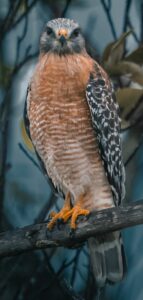
Our good friend, Janelle, sent me an 8 second video to share with you – taken after those whopper storms with high winds and hail ripped through here earlier this week. Look closely and you will see one adult and at least one baby head sticking up. All is well with the Red-shouldered Hawk family! Click here for video: Red-shouldered Hawk Family
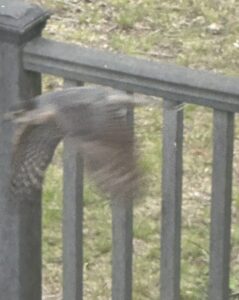
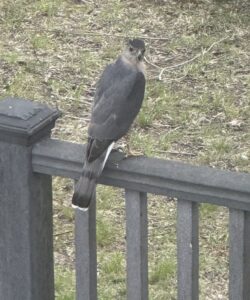
And look who we have making itself right at home on our deck↓. This is a Sharp-shinned Hawk. This bird will be leaving – or has left – for its nesting grounds in Canada. Range maps in field guides and on allaboutbirds.org from Cornell Laboratory of Ornithology do not agree on this bird’s nesting range. Some have Illinois and the surrounding states as part of its spring and summer range and some do not. All I can say is I have never known of a Sharp-shinned Hawk to nest anywhere around here – and my local birding friends agree. But regardless, this is a Sharp-shinned Hawk and sadly its meal was a Northern Flicker – eaten on the ground close to the lake shore in our backyard. Yes, hawks have every right to a meal – as every creature does, including us. I just wish it had not been one of the flickers.
To end on a much cheerier note – our muskrat is back. We have had a muskrat using our shoreline’s bank for the 20 years we have lived here. And it seems to us he uses the holes he has dug as his own private rooms. There is only ever one muskrat. However, he does swim back and forth across the lake at least daily and sometimes several times a day. We think his mate and young are over there – it is less developed, more protected, and maybe best of all for him, away from his personal space? We are glad to have him back! Click here to watch the wake of his swimming: Our muskrat having a leisurely swim …… and the bird you hear singing at the beginning is a Rose-breasted Grosbeak.
P.S. Forgot to include photos of those gorgeous Rose-breasted Grosbeaks. So here they are….