

Mexican Hat, Upright Prairie Coneflower, Yellow Coneflower, Long-headed Coneflower (Ratibida columnifera)
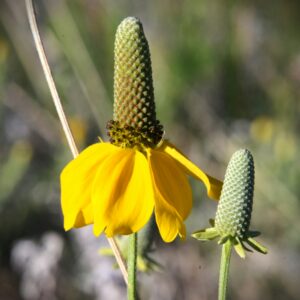
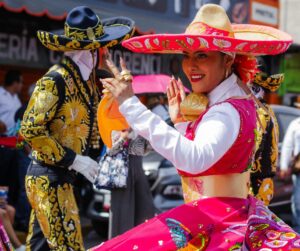
I have always known this plant by the common name of Mexican Hat. It got this name from the fact it is native to our southwest states and northern Mexico, and the flowers resemble sombreros. Any of you who have ever been in the desert know the wide brims of sombreros keep the skin of your face, neck and shoulders from burning to a crisp. Whoever invented the sombrero was a genius! When people in Mexico or our southwest states are dressed up in their traditional finery for weddings or celebrations of any kind, the sombreros are striking and memorable. Luxurious to behold. So for me, the common name of Mexican Hat for these plants is perfect. This is a great plant with wonderfully colorful and beautiful flowers that are sombrero-shaped.
If you have an area where these plants would fit and thrive, plant them! You will not be sorry. They thrive in dry, more arid places – like our southwest – but if you look at their range map, you will see they are native across much of the U.S. and western Canada.
Light: Full/part sun. I have Mexican Hat planted in two areas of my gardens – one in full sun all day long and the other in part sun – morning sun only and shaded in the afternoon by our house. In both areas, the Mexican Hats are growing very well.
Soil and water: This plant will grow in ordinary garden soil, soil that has a lot of clay (my soil), and also soil that is more sandy. Not a picky plant! As to moisture, it likes it medium to dry. It will tolerate drought better than most perennials.
Hardiness Zone: Zones 3-9.
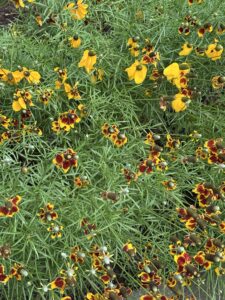
Size: This depends on how you grow it. I have never had this experience with any other plant. If you support this plant with a plant ring, its height will be about 3 ft. tall. If you do not support it, it will sprawl and be closer to 2 feet tall – or a bit less. What is unique about this plant is that unless you peer closely into the plant, you will never know it sprawled.
Mexican Hat has narrow, ferny, feathery leaves but there are so many of them that they create a solid mass that is about as dense as a plant can get. If you get down at eye-level with it, you cannot see through it at all – it is like looking at a wall made of ferny leaves. You cannot see the center stem, nor can you see any of the branching. If you support it, the plant will be about 3 feet tall by about 18-24 inches wide. If not supported, when it sprawls – or tumbles over – the dimensions are reversed. It will be about 18-24 inches tall by about 3 feet wide. I find this quite an interesting feature and actually pretty darn amazing. The first year I grew Mexican Hat, I did not support them and only knew they were sprawling – had tumbled over – when I went to cut them to the ground in the early part of the following spring and took a good look at how the plant was growing.
Other than the height and width changing – dependent on whether you support the plant or not – the plant itself does not seem to care if it is upright or sprawled. I have grown them both ways and both were covered with flowers for weeks and weeks. When fully leafed out and flowering, its shape is oval/spherical.
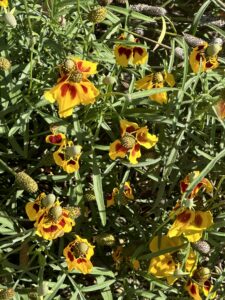 Bloom period and color. Deadheading. Transplanting: References are all pretty much in agreement: June, July, and August. I would also add September and October. The big bloom with the most flowers is in June through August, but there will still be a fair amount of flowers in September and October. I have about 10 of these plants and once they start blooming in June, they keep blooming until frost – in this way, they are like an annual. I thought maybe all this blooming would make this plant a more short-lived perennial, but that does not seem to be the case. 8 of my 10 plants are 12 years old and still going strong.
Blooms yellow or yellow with deep brownish red/burgundy.
Deadheading: I do not deadhead any of these plants. I have cut mine down right at ground level in late fall after the first hard frost and blooming is finished, and they have come back beautifully the following spring. But now, I leave them in place through the fall and winter and cut them to the ground in late March. The plant does not seem to care when you cut it to the ground, but it must be done before the plant starts its growth in early spring.
This plant is a good self-seeder but not invasive. Just reliable. The seeds generally fall close to the parent plant so you will not find new starts of plants all through your garden. If you cut them to the ground in fall and are careful not to dislodge seed from the seedheads – which are the large cones above the flower petals – you will have little or no self-seeding.
Transplanting: Mexican Hat has a long taproot and so is difficult to transplant – I find it impossible. Be sure of your site before you plant.
Butterflies and birds: Butterflies, moths, and native bees will come to the flowers. I do not deadhead these plants but allow them to keep their seedheads through the winter. And I will walk through these plants several times in November and December when the seed heads are set and give each plant a shake. Those seeds come tumbling out and will fall straight to the ground. By doing this, I will get volunteer plants the following spring – and probably way too many, but they are easy to hoe or pull out. By scattering this seed, I find the area around these plants is visited daily all winter long by Dark-eyed Juncos and sparrows – especially White-throated Sparrows. These birds love these seeds. My scattering the seeds on the ground makes them more easily accessible.
Deer, rabbits, and other pests: Nothing has ever bothered any of my plants.
What to plant with Mexican Hat: I have most of my Mexican Hats in a mass planting in the garden between my front windows and the driveway – these also serve as foundation plants. Mixed with them, are Golden Alexanders. Golden Alexanders bloom in spring and Mexican Hat from June on so in this corner space in the front of our house, there is bloom from about the end of April till frost – and all with just two perennials.
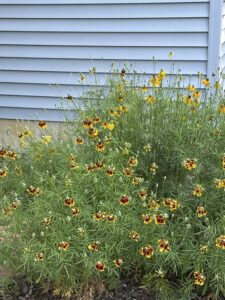
I have one Mexican Hat in one of my gardens in the back yard. This is planted with Culvert’s Root, Rattlesnake Master, Summer Sunflower (Heliopsis), Lantana (an annual that grows about 1-3 ft. tall), and Mexican Sunflower (Tithmonia – an annual that grows 3-4ft. tall). The perennials and annuals in this garden are big, like full sun, and a drier soil, so all are growing well. In the adjacent garden, I have Mullein and Comfrey.
How to use Mexican Hat: This is an excellent perennial for a semi-arid garden. Once it is established, it needs very little water compared to most other perennials. Only the succulents survive on less water. In the mass planting I have in my front garden, they also act as a foundation plant. Normally foundation plants are shrubs, but larger perennials often have attributes like shrubs and can be used. Using perennials this way will make your house and garden more unique in your neighborhood. Most everyone – and especially landscapers – use shrubs – and often the same shrubs – to soften or hide foundations. Think outside the box – use a big perennial! And if you use it this way, do not cut it to the ground till late March/early April. You will only have about 6 weeks of a bare spot. Mexican Hat grows fast, well, and dense.