

What is going on around here? And I have heard from some of you! Part 2 – more to follow!
Continuing from my last post:
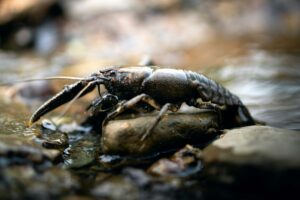
Janelle lives here in central Illinois and showed me this video on her phone. I was simply amazed! She lives at the end of a cul-de-sac in a small town. Her house sits on top of a steep hill of grass and prairie plants that she mows. At the bottom of the hill is a stream, then acres of woodland. But her house is a good distance away from this shaded stream – and uphill! She was doing some spring cleanup in one of the perennial beds at her house and she unearthed a crayfish who is a LONG way from what I would think would be good habitat. And even though you will see it is in mulch – damp soil – this is not what I associate with crayfish. Here is her video – taken in the driest area of her land: Crayfish in an interesting habitat. If you are interested in crayfish and especially their habitat, here is a website: All You Need to Know About Crayfish
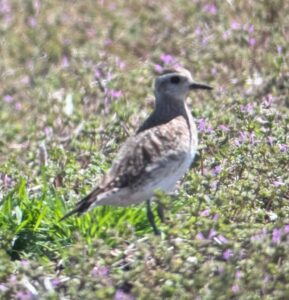
And this photo is from Kristen – also from central Illinois. American Golden Plovers migrate through here in flocks every spring. They land in our big agriculture fields that were most often in corn the previous year. Some of these fields have wet areas in early spring and these plovers land in and around them to rest and eat before moving on to northern Canada where they nest. They still have a long way to travel after leaving our fields.
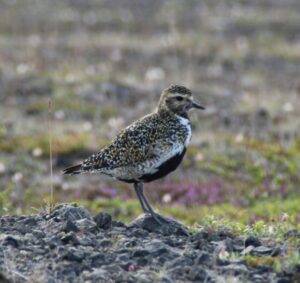
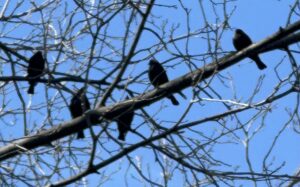
Right now, there are both male and female Brown-headed Cowbirds at our feeders and in all three of our birdbaths. That will change – soon, it will only be the males you see. In a week or 2, the females will not have time to hang around our trees and feeders like these males are doing. They will be too busy sneaking around looking for unattended nests in which to lay their legs. But this small group of males is so typical of their behavior this time of year. Up in our trees – generally together and chatting. Just hanging out like guys at the local bar!
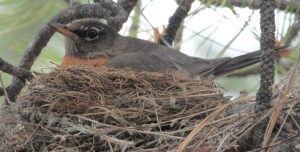
And have you ever watched a robin actually make her nest? How she shapes the cup? Here is a female working on her nest that is at the elbow of the downspout right next to our garage door. I took these 2 videos early last week. When she finished, she did not return to the nest for 3 days and we thought she abandoned it. She did not. She has now been sitting tight for the past 5 days. Our guess is she has at least 1 egg and possibly 2. Here are the videos: American Robin shaping her nest and Robin continues to make her nest comfortable.