

Salvia – a hummingbird magnet!
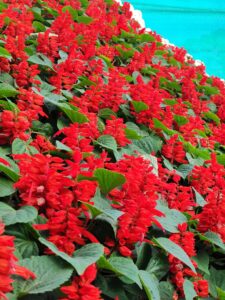
Light: Full sun.
Soil and Water: Average garden soil, but it must be well-drained. They do not do as well in a rich soil because they will become leggy and then the stems will not be strong and straight – the plants will fall over/flop. They do grow better when mulched. After planting, water deeply twice a week for the first month, and then unless there is a drought, they should be established.
Size and shape: Most annual Salvias are 12-24 inches tall, but check the plant tags. They can be as small as 8 inches and there are a few varieties that can grow as tall as 3 feet.
Salvias are upright, solid-appearing plants with strong stems. They will form somewhat of a mound. Cutting off the flowers as they fade is the key to your Salvia plants developing lovely shapes, looking great, and producing lots of flowers.
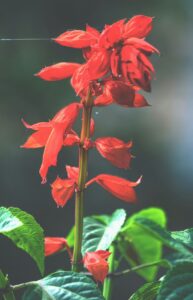
Bloom period and color. Deadheading: Salvia has been hybridized and there are many colors from which to choose. Hummingbirds will come to all of them, but the red salvias are the hummingbird magnets.
Deadheading: This plant benefits from all the buds and blossoms being removed as you plant them. Cut the buds or flowers off below the last bud/flower and above the intersection of the first leaf stem to the main stem. This will cause the plant to begin to branch out which in about 6 weeks will produce more blossoms than if the original blossoms were left to bloom. And because of this initial pruning, the plant will continue to branch and be wider. Each branch will produce blossoms. If you do not remove the first blooms and buds, your mature salvia will have less branching, therefore less flowers.
Once your salvia begins to bloom, check your plants once a week and remove all flowers that are starting to fade. Once again, make your cut below the last flower and above the intersection of the first leaf stem to the main stem. This will encourage your plant to form more buds.
Deer, rabbits, and other pests: Deer and rabbits will nibble these plants – most especially when you first set them out in spring. If you have these animals in your garden, spray these plants with a repellent when you plant them – follow the directions on the label.
What to plant with Salvia: These plants go with just about everything. Their habit is neat, solid, and upright. They do not interfere with other plants. I use Salvia quite a bit in my own garden to fill in empty spots – as long as the spot is in full sun, it looks great everywhere I put it.
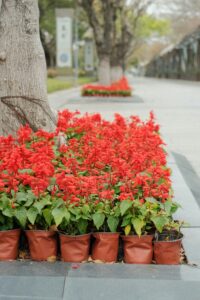
How to use Salvia: These annuals can be planted in the ground in your garden and also in containers. Keep the faded flowers cut off and they will bloom till frost.
In the ground: They can be planted in groups of 3 and used as accent plants wherever you would like constant bloom, or plant them in much larger numbers to create a mass of red. If you do that, be sure you can reach all the plants to keep the faded flowers cut off.
In a container: When you remove the buds and flowers as you plant, Salvia will branch out and become wider so it can be used by itself in pots up to about 14 inches and 1 plant will fill the pot. If you use a Salvia with other plants in a container, it will not branch out as well and so will not bloom as profusely. However, its flowers – shape and color – go well with many other annuals and so is a good container plant.
Miscellaneous: Be careful when buying your Salvias. They are one of the first annuals to show stress in their flats or 4/6-packs. If they are leggy or have lost a lot of their leaves, do not buy them – they will never really recover and give you the profuse bloom you want and of which they are capable. Buy the youngest ones you can – in their first flush of growth. If you have to keep them for a few days or weeks until it is warm enough for them to be outside, do not let them bloom or set buds until they are planted in the ground in either your garden or a container. And keep them watered. Salvias are somewhat drought tolerant once established in your garden but they are not drought tolerant in these flats and packs. Check them for water each day and keep those root balls moist – but not dripping wet.