
Is there anybody out there who is not freezing the moment they step outside?
Is it cold or what! No matter where people live – be it Minnesota, Pennsylvania, Kansas, North Carolina, Alabama, or even California – most people are cold the moment they step
outside. Temperatures just about everywhere are colder than normal. We here in central Illinois always have about 5-7 nights of below 0 in January, but this year it is going to be about 14 days – that is a big difference!
I do want to take time to tell you about the kindness of our neighbors. I think this is important because of all the news – and cell phone videos – we are seeing from Minneapolis and elsewhere. Anger, hurt, and devastation to lives seems to be ruling the day. It does not have to be this way and I know all of you reading this know that.
We have a new neighbor – a younger man. The snowplow blocked our driveway with big chunks – and does that not happen every time there is a good amount of snow and the snowplow comes? Our neighbor has a good-sized tractor with a snowplow, and he immediately came over and removed all those big blocks of snow and ice. And then Miles – who you often see at our bird feeders – and his dad who live just up the street came with their snow blower and cleaned off our long driveway, walk, and front porch. It was so bitter cold they took turns sitting in their truck every two passes. Now that is being neighborly. And I cannot tell you how much Cleon and I appreciated all three. We are still a nation of good and kind people. People who are honest and fair. So, thank you Jack! And thank you Miles and Rob!
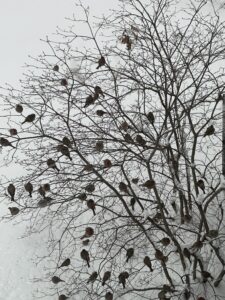
This is one of those times that I do not follow my own rules about feeder and birdbath cleanliness. Cleon and I do keep everything clean – we do this about once every week. If you are wondering how, here is a link: Bird Feeders and Bird Baths. Scroll down through the information on bird feeders and you will find the information on cleaning and maintaining bird baths. But right now, when it is so cold, I just put seed in the feeders, on the ground, and top off the birdbath with water. And yes, when you have seen me outside bundled up from head to toe, it is because it is not only cold, but the blowing wind makes it almost intolerable. I am doing the bare minimum to keep the birds fed with some water available. It looks like about next Tuesday, it will be sunny with the daytime temperatures in the low 30’s. That will be a good day for all the feeders and the birdbath to be cleaned and disinfected/bleached. The last thing Cleon and I want to do is to harbor Avian flu. But we also do not want to get frostbite. It is a delicate balance! Also, in another week, Cleon should be healed enough that he will be able to help – which greatly helps me. If you have been watching me when I have been filling the feeders, I need a stool! And a stool or stepladder on icy/snowy ground – is that not an accident waiting to happen? We have enough broken ribs in this household!
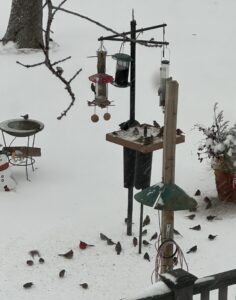
If you have been watching the livestream, you will see that right now, most of the time, the feeders and under the feeders are filled with birds. Some are also drinking from the birdbath. And everyone gets along! Not much pushing and shoving, bill snapping, or wing flicking. It is like they all know they must eat to survive – especially to get through these frigid nights of below zero weather and bitterly cold wind. Click on this link of the video I shot only a few minutes ago – everyone getting along except two feisty Juncos! 4:15 PM: A cold late afternoon at the feeders …..
These are the birds you are regularly seeing on our livestream:
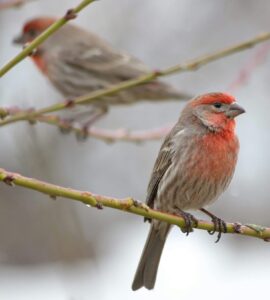
Blue Jay House Finch Downy Woodpecker
Hairy Woodpecker Red-bellied Woodpecker Dark-eyed Junco
White-breasted Nuthatch Mourning Dove Northern Cardinal
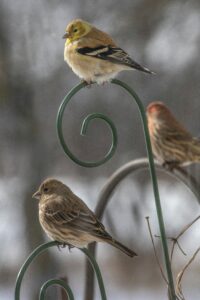
Eurasian Tree Sparrow American Goldfinch
And the ones you will see from time to time: (Note: House Finches and Purple Finches are hard to tell apart. I have included a link for explanation.)
White-throated Sparrow European Starling Fox Sparrow
American Tree Sparrow House Sparrow Eastern Bluebird (birdbath)
Northern Flicker Purple Finch: Purple Finches and House Finches – how to tell them apart
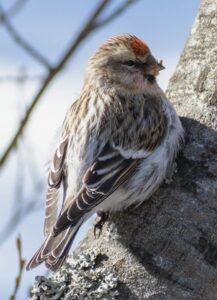
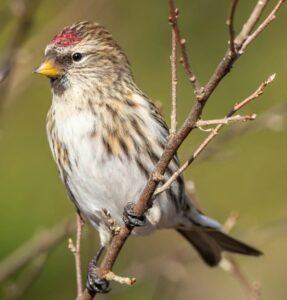
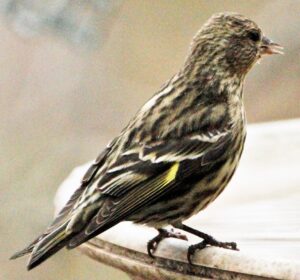
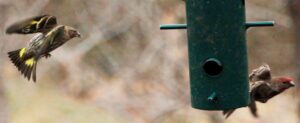
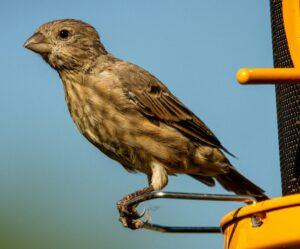
And these are the ones I have been looking for, I have yet to see, and we are never sure they will be around from winter to winter: Common Redpoll and Pine Siskin. And be careful – these birds both resemble House Finches. And we have a lot of House Finches at the feeders right now. To be sure which bird you are seeing, you have to look at each and every finch you see on the screen. There is also a bit of resemblance to the American Goldfinch – also in good numbers right now at the feeders and birdbath. I will include photos of all 4 birds.