
Cameron Prairie National Wildlife Refuge, near Lake Charles, LA
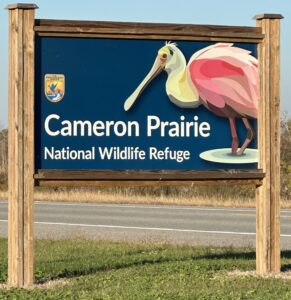
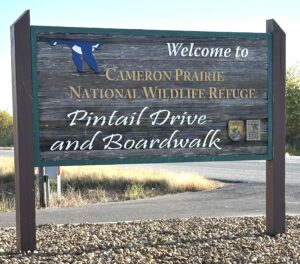
Cleon and I spent an afternoon on this refuge. Our bird list is not long, but what sightings! Birds we rarely see. And one I not only never saw, but never thought I would see.
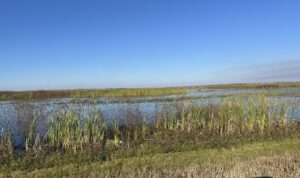
This is a newer refuge than Sabine. Cameron Prairie was created in 1988. Its mission: “Manage, protect, and perpetuate coastal marshes to provide high-quality food and habitat for wintering migratory waterfowl, migratory birds, and native wildlife.” Most of the migrating waterfowl and other birds arrive from the same two flyways as those on Sabine – the Central Flyway and the Mississippi Flyway. The 9621 acres of this refuge are freshwater marsh, coastal prairie, and old rice fields that are now shallow freshwater impoundments. The refuge also manages 14,927 acres of brackish marsh which is only accessible by boat. These acres are a nursery for shrimp, blue crab, and fish.
 Cameron Prairie was the first refuge established under the
 North American Waterfowl Management Plan which is a treaty among Canada, Mexico, and the U.S. This treaty was signed in 1986 by President Ronald Reagan. More than 200 species of migrating, wintering, and resident birds can be found on this refuge. Click here for more information: North American Waterfowl Management Plan
There is a Visitors’ Center. Listed hours are 9:30A-2:30P. We were there on a Tuesday – a day this building should have been open. It was not. And there was no sign indicating if it was temporarily closed or if the closure was more permanent. We were disappointed as these centers always provide information and guidance.
Our bird list:
White Pelicans
Snow Geese
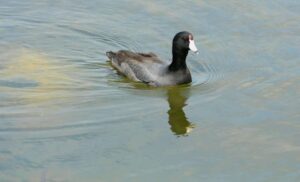
American Coot
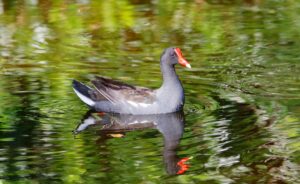
Common Gallinule
Green-winged Teal
Blue-winged Teal
Gadwalls
Northern Shoveler
Hairy Woodpecker
Eastern Pewee
Least Flycatcher
Great Blue Heron
Limpkin
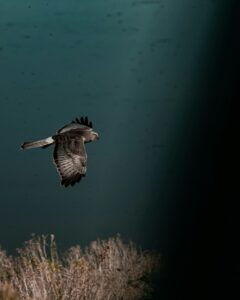
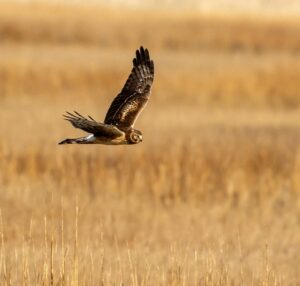
Northern Harriers
Red-tailed Hawk
More about a few of these birds:
American Coots and a Common Gallinule: Click here for two videos – one for each bird. Watch how they move: American Coot Common Gallinule
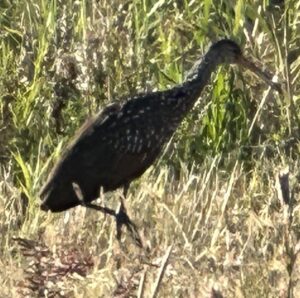
Limpkin: I was driving as slow as the car would coast (about 4 mph) and saw a blur of brown appear in my peripheral vision. I was shocked to see a tall, speckled brown bird and knew I had a Limpkin. A Limpkin! I have never seen one and never thought I would see one. I have been in good Limpkin habitat many times in Florida and never glimpsed or heard one. Researching these birds, one of the reasons they are not ‘Common’ is they eat mainly apple snails – these snails can comprise over 70% of its diet. So, it would be rare to find them where these snails are not abundant. Besides Florida, this bird is also in Central and South America and on the islands in the Caribbean where it is more ‘Common’. It appears there is almost no data on the number of nesting pairs or the success of its nests, but it is thought the population numbers in Florida have declined from about 10,000 individual birds in 1970 to as few as 3000 today. But these numbers are uncertain. I can tell you I have always done much of my Florida birding in good Limpkin habitat – although I do not know the population of apple snails in those areas. Limpkins live in fresh-water swamp forests; marshes; near sloughs, canals, and ponds; and they like large areas of brushy, grassy cover. These are my favorite habitats in which to bird. Wherever these birds are in the U.S., they are listed as ‘Local’ and/or ‘Rare’ and I would agree. Limpkins stand about 26 inches tall and weigh about 2.5 pounds. To compare, the much more common Great Blue Heron is about 54 inches tall and weighs about 6.5 pounds. Click on these two videos to watch how this bird moves – there are two because I have learned I cannot handle and post videos longer than 2 minutes. (Technology and I rarely get along!) The same bird is in both. Limpkin Limpkin 2
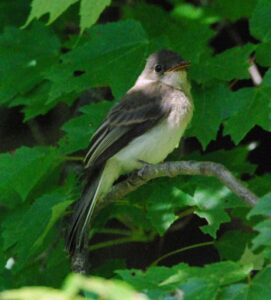
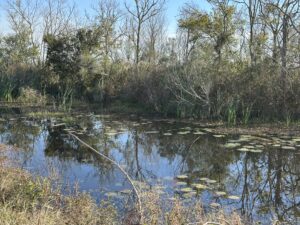
Eastern Pewee: Eastern Pewees are ‘Common’ throughout their range. What surprised me was they were here. If you research this bird in your field guide, you will see its habitat is listed as being found in “mature and deciduous and mixed forests and forest edges.” (The quote is from Sibley’s field guide: Sibley Birds East,) I have never seen the habitat for a pewee described as coastal marsh which is what 99% of this refuge is. You will see in one of the photos I included earlier in this post of this refuge that there are a few trees but let me emphasize the word ‘few’. There are some hedgerows of trees and tangled plants around a few of the canals, but these pewees had to fly across acres and acres of open marshes to get to them. Generally, here at Cameron Prairie, there are no trees in sight and certainly no woodlands or forests. And yet the three birds we saw were definitely pewees. Once again, if birds would only read their entries in their field guides, birding would be so much easier!
Northern Harriers: There were two – a male and a female. Both working a large grassland in beautiful fall colors – lots of browns, reds and golds. Against these fall colors and the brilliant blue sky, these two big raptors were absolutely beautiful.