
Taxonomy – you need to know the changes to communicate with eBird and other birders……
Taxonomy. Merriam Webster defines it as “the study of the general principles of scientific classification: systematics.” Could that sound any more boring? I’m not sure it could. But taxonomy is important – and it is far from boring. What we name things helps us to communicate – especially when we are not from the same place. Names can also serve to describe what we are seeing – or in the case of birds – hearing.
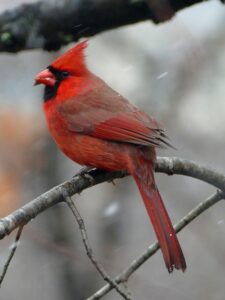
Here is a simple example. When I was a young teenager – long before I ever became a birder – I lived in southeastern Pennsylvania and regularly visited our family who lived out here in central Illinois. I stayed with my cousin Nancy. And there was one visit where she could not wait to show me all the Redbirds that were in her yard. I looked forward to it – but was so surprised when her Redbirds were my Cardinals. I did not know they were commonly called Redbirds here in central Illinois and she had no idea they were not called that in Pennsylvania.
Common names – and especially scientific/Latin names – are important. We cannot communicate with each other if we do not have a common vocabulary – especially if we live in another state or another part of the world.
The AOS is the organization that reviews common and scientific names for birds each year, and their placement in families. They also review the status of species and subspecies – they separate some species and combine others. eBird is now also participating. And this could prove interesting as the AOS has always been considered the final word. But as you will see as you read on, the two are not always in total agreement. eBird has accepted most of the AOS changes but have adapted some of their own which the AOS does not recognize and this is confusing. My advice is if you use eBird, conform to the changes they have made. But in every other aspect of birding, use the changes the AOS has made. Here are some links to help you sort this out:
Just what is the AOS and how did it come to be? Click here for information: The American Ornithological Society
Click here for more information about the changes the AOS has made, all the ones they have made worldwide, and their future plans for changing names – it is ambitious and not without controversary:
English Common Names Project – AOS
Changing common names of birds that have been named after people – a proposal
What is eBird? Click here: The Cornell Laboratory of Ornithology – eBird
Where this could get complicated and confusing is when a park or national wildlife refuge has a bird list either on their website, accessed by a cellphone scan, or a printed list. Which name should they use? The AOS approved name or eBird’s preference? And if you are on a bird count – especially when applying for grants – which names do you use? Everything must be correct. But for most of us birders, who are just enjoying watching and IDing birds, is this really important? Afterall, who actually looks at your field notebook? I still struggle to call the Eastern Towhee – Eastern Towhee. In my mind, it is still the Rufous-sided Towhee – what a great name and was exactly right! But it was changed in 1995. The species was split in two. Both species have rufous sides so that common name was discontinued and we now have the Eastern Towhee and the Western Towhee – reflecting their geography.
But this does matter. In my opinion, AOS and eBird must agree – get on the same page – with each and every bird. And to be honest, I do not know why they are not in agreement. But be aware, that for some birds now – and most certainly this will continue each year – they are not. AOS has always been the authority. I am not sure why that has changed. Nor do I understand what eBird is trying to do with not adopting all the changes. Hopefully the answer is there has just not been enough time. The last thing we all need is ‘bird politics’!
There have been many changes worldwide. Here are the changes in the U.S. – I did not include rare or accidental birds:
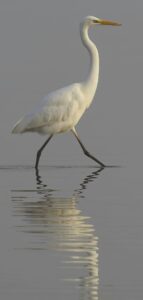
1. Great Egret. (I used the same 4 field guides for all the following birds – 3 books and 1 online – so you could see the history of the changes)
Peterson Field Guides – Eastern Birds (1980) – Great Egret (Casmerodius alba)
Peterson Field Guides – Western Birds (1990) – Great Egret (Casmerodius alba)
Sibley Birds East (2016) – Great Egret (Ardea alba)
allaboutbirds.org (Cornell Lab of Ornithology) – November 2026 – Great Egret (Ardea alba)
eBird – November 2026 – lists one species (worldwide) – Great Egret (Ardea alba)
AOS – 2026 – American Egret (Ardea egretta) – this is the egret we see in the US which we commonly called Great Egret. The former Great Egret in Europe and Asia is now the Great White Egret (Ardea alba).
What happened? This egret has a world-wide range and was all one species – Great Egret. It has now been divided into two species. The Old World species (Europe, Asia) is now the Great White Egret and kept the scientific/Latin name of Ardea alba. The Great Egret that we see here (North America) is now called the American Egret and has the scientific/Latin name of Ardea egretta. One worldwide species was divided into two separate species. Be aware!!! This change is with the AOS only. eBird has kept one species. This matters if you are recording on eBird or are taking part in bird surveys. If you are just out enjoying looking at birds and keeping track of what you are seeing – you know what you are seeing. For now, use whatever name seems right to you. This does not seem to be settled.
Why was the scientific name Casmeradius alba changed to Ardea alba? The simple answer is the Great Egret – which now the AOS has separated into the Great White Egret and the Anerican Egret – seems more closely related to herons than to smaller egrets like the Snowy Egret. Therefore its scientific/Latin name was changed to reflect that. Herons are Ardeas.
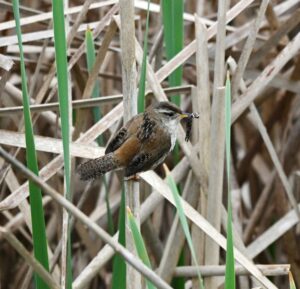
2. Marsh Wren.
Peterson – Eastern – Marsh Wren (Cistothorus palustris)
Peterson – Western – Marsh Wren (Cistothorus palustris)
Sibley – Marsh Wren (Cistothorus palustris)
allaboutbirds – The single species of Marsh Wren has now been divided into 2 separate species. Eastern Marsh Wren (Cistothorus palustris) and Western Marsh Wren (Cistothorus paludicola).
eBird – The single species of Marsh Wren has now been divided into 2 separate species. Eastern Marsh Wren (Cistothorus palustris) and Western Marsh Wren (Cistothorus paludicola). Notice, no hyphens in the common names.
AOS – The single species of Marsh Wren has now been divided into 2 separate species. Eastern Marsh-Wren (Cistothorus palustris) and Western Marsh-Wren (Cistothorus paludicola). Notice both common names contain hyphens.
A hyphen seems like such a small thing, but it is a difference. Hopefully AOS and eBird will get an agreement on which form to use.
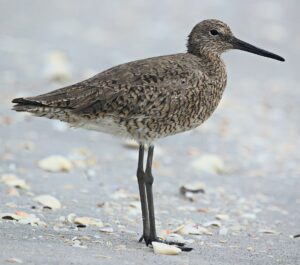
3. Willet
Peterson – Eastern – Willet (Catoptrophorus semipalmatus) – no mention of 2 subspecies.
Peterson – Western – Willet (Catoptrophorus semipalmatus) – no mention of 2 subspecies.
Sibley – Willet (Tringa semiplamata) – 2 subspecies: Western and Eastern. No scientific/Latin names given.
allaboutbirds – The single species of Willet has now been divided into 2 separate species. Prairie Willet (Tringa inornata) and Saltmarsh Willet (Tringa semipalmata).
eBird – The single species of Willet has now been divided into 2 separate species. Prairie Willet (Tringa inornata) and Saltmarsh Willet (Tringa semipalmata).
AOS – The single species of Willet has now been divided into 2 separate species. Prairie Willet (Tringa inornata) and Saltmarsh Willet (Tringa semipalmata).
What happened? It has been found that the 2 subspecies of Willet – the Western and Eastern – had differences in genetics and what is termed vocalization. I think everyone can agree that Willets make rather interesting, distinct noises, but they do not ‘sing’. These two subspecies also do not breed in the same habitats, do not interbreed, so both were elevated to species. Now instead of Willet with 2 subspecies of Western and Eastern, we have 2 species of Willet. Prairie Willet (which was the Western subspecies) and Saltmarsh Willet (which was the Eastern subspecies).
Why was the scientific/Latin name Catoptrophorus semipalmatus changed to Tringa semiplamata ? In 2006, after much study, it was decided that Catatrophorus would no longer be a genus. Willets were then placed in the genus Tringa which includes sandpipers – it was found that Willets share traits with sandpipers.
Finally! AOS and eBird are on the same page! Total agreement!
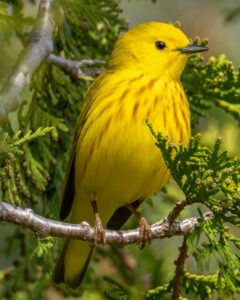
4. Yellow Warbler
Peterson – Eastern – Yellow Warbler (Dendroica petechia) – no mention of 2 subspecies.
Peterson – Western – Yellow Warbler (Dendroica petechia) – no mention of 2 subspecies.
Sibley – Yellow Warbler (Setophaga petechia) – 2 subspecies: Northern and Golden (Caribbean). No scientific/Latin names given.
allaboutbirds – The single species of Yellow Warbler has now been divided into 2 separate species. Northern Yellow Warbler (Setophaga aestiva) and Mangrove Yellow Warbler (Setophaga petechia).
eBird – The single species of Yellow Warbler has now been divided into 2 separate species. Northern Yellow Warbler (Setophaga aestiva) and Mangrove Yellow Warbler (Setophaga petechia).
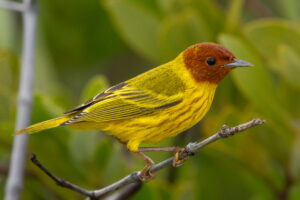
AOS – Does not use the common name of Northern Yellow Warbler or Mangrove Yellow Warbler. It uses the common names Yellow Warbler and Mangrove Warbler. So in AOS listings, the original 1 species of Yellow Warbler has been split into 2 species: Yellow Warbler ((Setophaga aestiva) and Mangrove Warbler (Setophaga petechia).
What happened? It has been found that the 2 subspecies of Yellow Warbler – Northern and Golden (Caribbean) were different genetically and in color of plumage – the color of their heads are decidedly different. So instead of 1 species with these 2 subspecies, these 2 subspecies are now separate species. The northern subspecies became the species Northern Yellow Warbler or Yellow Warbler – depending on where your area birding list got its names or whether you are posting on eBird. Regardless of common name, the scientific/Latin name is always the same – Setophaga aestiva. The Golden (Caribbean) subspecies became the species Mangrove Yellow Warbler or Mangrove Warbler – again, depending on whether you are following the AOS or using eBird. The scientific/Latin name remains the same – Setophaga petechia.
Why was the scientific/Latin name (Dendroica petechia) changed to (Setophaga petechia)? This is complicated but the easiest way to explain it – and enough for us amateur birders – is that the birds in the genus Setophaga have a close relationship in terms of evolution. These 2 species of warblers share some of that evolutionary history.
5. Painted Redstart -Click here for photos: Photos of Painted Whitestart (formerly Painted Redstart)
Peterson – Eastern – not included. This is a western bird generally only found in Arizona and New Mexico – it is ‘Uncommon’ to ‘Rare’.
Peterson – Western – Painted Redstart (Myioborus picta).
Sibley – Painted Redstart (Myioborus pictus).
allaboutbirds – Painted Whitestart (Myioborus pictus).
eBird – Painted Redstart (Myioborus pictus). However, this might change in the near future but for now, if you use eBird, this bird is listed as Painted Redstart.
AOS – Painted Whitestart (Myioborus pictus).
What happened? The common name was changed from Painted Redstart to Painted Whitestart. This change was made because although the bird has a quite red tummy, when the bird fans its tail – which it frequently does – the outside tail feathers flash white. This is an obvious feature. There are other redstarts who are now called whitestarts and what they all have in common are those flashing white tail feathers. Some have red on them, most do not. To unite these birds with a common name under one character trait, the obvious choice were those white tail feathers. This Painted Whitestart is the only whitestart we see here in the US.
Why was the scientific/Latin name (Myioborus picta) changed to (Myioborus pictus)? This is a technicality. It was determined that picta was not a valid word. The correct form is pictus.
Important note!!!: This name change does not affect the much more common American Redstart (Setophaga ruticilla) – the American Redstart is not in the same genus as the Painted Whitestart.
Don’t let all this interfere with getting out and enjoying birds. That Eastern Towhee whose name change just does not stick with me – its name does not matter when I watch it sitting on the edge of a lower branch and singing its heart out: “Drink your teeeeeeeea!” Or foraging in thick mulch or leaves, flinging beaks full of stuff every which way, and flashing those white tail feathers. The bird does not know the name we have assigned it, but it certainly knows its place in nature and that is what is important.
Cleon and I wish all of you the best Thanksgiving – this in our favorite holiday! Time to spend with family and friends and stuff yourself with turkey, mashes potatoes, pumpkin pie – whatever your traditions are. We will have a houseful of family from Thursday through Monday – including a very friendly and young big dog – so no posting next Sunday. My next blog will be Sunday, December 6th. Happy birding! Linda
P.S. I have added another plant – and a category. Common Sage. The new category is herbs. I place a lot of herbs in my flower gardens and also with shrubs – some herbs behave as small shrubs. Here is the link: Common Sage.