

Lady’s Mantle (Alchemilla mollis)
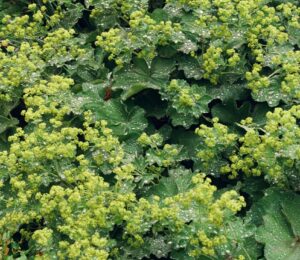
Lady’s Mantle is a perennial, but it is also an herb. Historically, it was used for digestive issues and reproductive problems for women. It was also used to soothe mouth ulcers and sores. As I explain below, in my opinion, this plant grows better in part shade to shade while most herbs prefer full to part sun. Placing Lady’s Mantle in full sun can cause the leaves to be damaged. I think your plant will be better placed in a shady garden rather than a sunny herb garden.
Light: Plant tags generally say full to part sun but I disagree. When I have placed them in full sun, I have found that in July and August, the leaves tend to burn – they will become dry and brown especially at the edges. The reason I add these plants to my garden is because of their lovely leaves. I place my Lady’s Mantle plants in part shade/shade – about 4 hours a day of indirect filtered light. As I explain under Size, my plants are smaller and one reason could be that I plant them in shaded areas. In areas of filtered light, the leaves stay fresh and lovely for the entire summer – no browning of the edges.
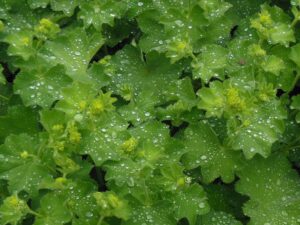
Soil and water: Lady’s Mantle will grow in moist, average garden soils, but the soil must be well drained. These plants will not thrive in a soil that stays wet. If planting in full to part sun, mulch as you normally do. If you are placing these plants in part shade/shade, use a thinner layer close to the plant and do not mulch under its leaves. The crown of this plant – its center – can rot if the soil stays too wet. Soil in shaded areas stays moister/wetter longer so by limiting the mulch, you keep the soil dryer which will prevent any rot.
Hardiness Zone: Zones 3-8.
Size: Tags often say 1-2 feet tall and wide. I have always grown Lady’s Mantle and for me, they tend to be smaller – 1 foot tall and wide. I always place mine in part shade/shade. If you plant yours in sun/part sun, your experience could be different.
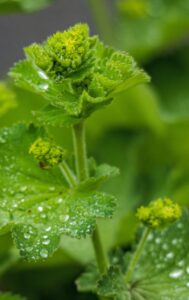
Bloom period and color. Deadheading: Blooms yellowish green in late June-early August. To deadhead, cut the faded flower stems at ground level so the cut stems are totally concealed by the leaves. This will keep your mound of lovely leaves looking its best. I recommend not allowing your plants to set seed as in some areas – particularly in our northwest states – Lady’s Mantle is a prolific self-seeder and can easily become invasive. I have had Lady’s Mantle in my gardens in Pennsylvania, West Virginia, and also here in Illinois and since I always cut the fading flower stems at ground level, not allowing any to set seed, I have never found them invasive. For me, they have always been well-behaved garden plants. But know your experience could be different and know there is a danger in letting seed heads form. If you live in our northwest states, my advice would be to ask at your local extension office or at a garden center for advice before you plant.
Butterflies and birds: Butterflies, moths, and beneficial insects will use the flowers of Lady’s Mantle.
Deer, rabbits, and other pests: I have never had deer or rabbits bother Lady’s Mantle however, I know from other gardening friends that if food for these animals is scarce, they will munch on Lady’s Mantle from time to time. But these plants are not amongst their favorites and if food is plentiful, they will avoid the plants. Lady’s Mantle is also not bothered by destructive insects or disease.
What to plant with Lady’s Mantle: I have aways planted Lady’s Mantle in part shade/shade so mine have been planted with smaller Ferns and Impatiens. I also like to add Coralbells, upright Fuchsias, and Toad Lilies.
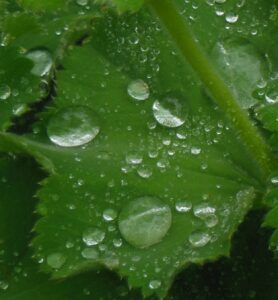
How to use Lady’s Mantle: I grow Lady’s Mantle for its gorgeous, velvety leaves that resemble a grand lady’s cape. The plant gets its name when dew – or rain – forms drops on the leaves. These drops will look like diamond brooches on a cape of velvet. Because mine have always remained smaller (about a foot tall), I have used them in the front edge of gardens and also as a grouping in the front part of a garden. I can always count on these plants to form mounds of lovely leaves that look fresh every day of the gardening season. And these mounds will look good with just about everything planted next to them.