
Fall Flocks of Blackbirds and European Starlings
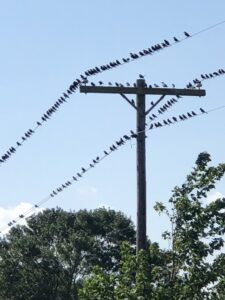
Fall is a great time to watch flocks of blackbirds and starlings – especially in rural areas where there are open fields and meadows. Places where you can see a lot of sky. Some of these flocks will be huge. Whoosh! Whoosh! Whoosh!
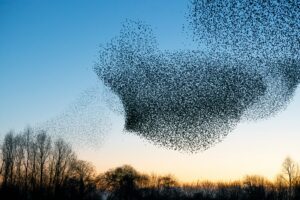
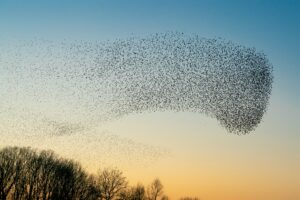
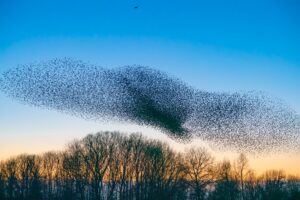
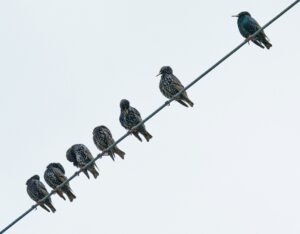
These flocks are mesmerizing and simply amazing to watch. The entire flock can turn on a dime – every bird is synchronized. And the flock will turn into itself. Never a collision. Never a bird left behind. All these hundreds – even thousands – of blackbirds and starlings act as one. (All three photos from Getty Images on Unsplash.)
These flocks are not always just one species of bird – athough they can be. Often there are several species. Try to get a good look at as many of the birds as you can.
These are the main four to look for:
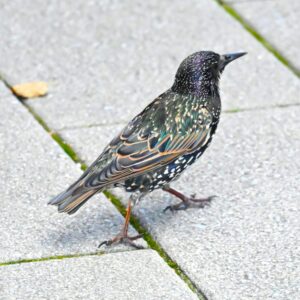
European Starling – look for the short tail.
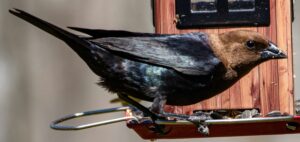
Brown-headed Cowbird – the brown head can be hard to see unless you use binoculars. Most often, this bird looks all black, or simply dark.
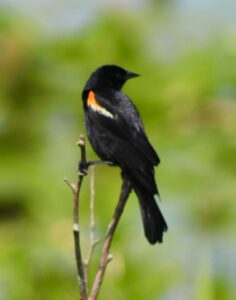
Red-winged Blackbird – The bright red epaulette of spring and summer will now be more of a thin yellowish line.
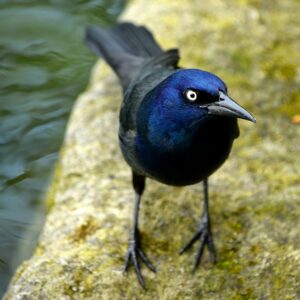
Common Grackle – the most iridescent of these blackbirds. Beautiful, lush tail that is often folded into a keel shape when flying.
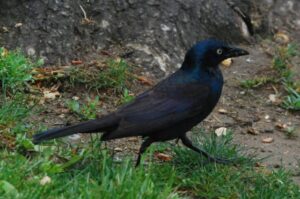
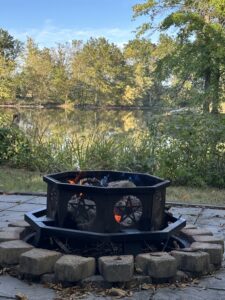
Cleon and I were sitting on our patio that is close to the lake – enjoying a fire. It is not cold at all, so we do sit back from the heat. And central Illinois is quite dry so unless we get rain next week, our fires will be over until we do. So, imagine us sitting in our Adirondak chairs, binoculars in our laps, cold glasses of water on the table between us, listening to a flock of blackbirds calling to each other from across the lake, and rather sleepily gazing out over the water when BAM!!!!BAM!!!!! Two shotgun blasts one right after the other. Talk about sitting bolt upright! And the blackbirds exploded out of the trees with very loud alarm calls. They flew across the lake, towards us and started landing in our trees. But they were upset and not one bird could settle down onto a branch for any length of time. I looked up and took this video – turn your sound up to hear them: Flock of Blackbirds – Mainly Common Grackles. As you can see and hear, these birds are agitated. Once the entire flock reformed in our treetops – and this took some time as the birds were nervous – they moved on. They did not go down to our feeders nor have they returned.
We only have a flock or two every fall and they are never here in our neighborhood for more than a week or two so this is tolerable for us. However, other neighborhoods are not so lucky as huge flocks of blackbirds can settle in for weeks or even months – there is incessant calling before dusk and defecating all night long. A mess on streets, sidewalks, and most of all, cars. If blackbirds are plaguing you, I have written an article with some suggestions that have been tried and do work. We live in a rural area – but in my opinion, shotgun blasts are never the answer to this problem. The birds can get hurt and in my experience, shooters do not always know where their bullets/pellets are going to land. And that is a problem. Here is the link: Discouraging Blackbirds and European Starlings.
Hope you can get out and enjoy some beautiful fall weather – take in all the colors of the leaves. And don’t forget to vote! Happy birding! Linda
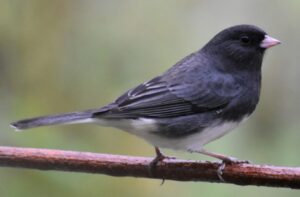
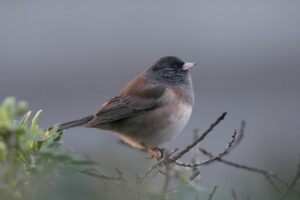
P.S. Our Juncos just arrived yesterday – a small flock was all over our front flower garden and eating seeds on the ground that have been dropped by the plants. And several took baths which you would have seen if you were watching the Bird Bath Livestream. It may have been 80° but Jucos are a sure sign winter is coming!
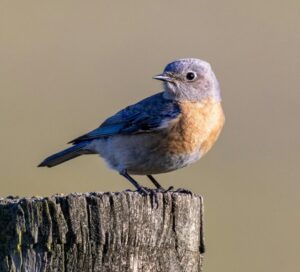
And from time to time, there are 4 Eastern Bluebirds at the birdbaths at our feeders. They stay in a close group so I am guessing these might be juveniles from an early nest this past spring.