

Woodpeckers
This is the last blog entry in my series on once common birds whose populations are in steep declines and the actions of our federal government on public lands where these birds live, how this all fits together, and what you can do to help.
Instead of beginning with an Executive Order or a Fact sheet from President Trump, I will begin with a press release from the US Department of Agriculture which was released by Secretary of Agriculture Brooke L. Rollins who was appointed by President Trump. What the press release – also the Secretary and President – emphasizes is the return of control of federal lands to ‘local managers’*. And that this step was necessary to manage these large forests and woodlands – that ‘local mangers’ know best. That this lessening of or eliminating regulations for access roads into these forests and woodlands will allow better and closer management of these vast areas to prevent overgrowth and wildfires.
I do not know enough about the ‘local managers’ that are cited in this press release but as a federal taxpayer in Illinois, I would like federal land in other parts of the country under federal control. And if ‘local managers’ need to be hired by the US Forest Service for management advice, then do it, but the Forest Service should closely oversee and monitor all decisions and activity. Not simply cede control to ‘local managers’.
Environmental groups are against ceding control to ‘local managers’, and it is their opinion that although the President and Secretary are emphasizing more wildfire control, this also eliminates restrictions for access roads for logging companies and puts these forests under local control. But these lands are not locally owned, they are owned by all of us living in the US. The ‘local’ view of a large forest may be very different from a federal view of that same forest. If the ‘local managers’ have strong ties to local logging companies, then what is in their best interest for their local area could devastate land and habitats they do not actually own – we who are taxpayers living all across the US own it.
This is just one more thing for you to consider as you are walking through your favorite habitat. Consider your own local government – what would they do in a similar situation? And this is another reason to vote – and not just for national leaders, but the leaders in your own community are so very important.
Here is the link to the press release from Secretary Rollins: Press Release from the USDA. And here is a reaction from one of the larger environmental groups – The Nature Conservancy: Reaction to repeal of the roadless rule.
Continuing from last week’s blog, opening up large woodland and forest areas has consequences to all wildlife living there. Management is one thing – although I do question some of that in that are we really so arrogant that we think we can always do better than Mother Nature? Forests and woodlands managed themselves very well for generations and generations before people came into being. So many problems today’s woodlands and forests have can be laid right at our feet.
Walk through some of our federally designated wilderness areas and look around. In wilderness areas, there is little management from us. Is there really a need for more management? And these woodlands, forests, deserts, and all the habitats have remained alive and healthy for generations.
Because there are few to no access roads, there is not a lot of human activity in these wilderness areas, so introduction of invasives is at a minimum and one of the reasons is because we are not bringing in stray seeds on our clothing, camping gear, tires, and the soles of our boots. Trails are few and not heavily used so erosion is at a minimum. There is just not a lot of human impact and these areas are thriving. Without us. Places like The Dolly Sods in West Virginia; 595,364 acres of Joshua Tree in California; about 7000 acres of Moosehorn National Wildlife Refuge in Maine; and North Absaroka in Wyoming. I have been to all these places, hiked the few trails, and all were experiences I will never forget. Peace, quiet, raw. Everywhere I looked, something new to discover. Beauty everywhere.
If you are interested, here is the Wilderness Act [Public Law 88-577 (16 U.S.C. 1131-1136) 88th Congress, Second Session, September 3, 1964 (As amended)] which was signed by President Lyndon Johnson, Democrat: The Wilderness Act of 1964****. Here are three statements about this act:
National Park Service: Wilderness – Law and Policy
US Fish & Wildlife Service: Their Position on the Wilderness Act of 1964
Federal government website explaining documents: Wilderness Act of 1964: What it Protects, Prohibits, and Allows
President Trump is working with people he appointed to either repeal this act or weaken it.
Things change. We all know that. There are more human beings on earth today than there ever was and our world population is increasing. We all want to support our lives with products – that is who we human beings are. And many of these products come from mines, oil wells, and forests. And to have these things means we have to alter the earth which means destroying habitats. Human beings have always been this way, and I see no change in that for future generations. But what has changed is our approach to this.
In the past – beginning with President Ulysses S. Grant who was a Republican, efforts to protect our environment – habitats – yet still allow us to have everything we need for our own lives, was a more balanced approach. And bipartisan. Public name-calling from both parties, which now is instantly all over the Internet and social media, does not promote bipartisanship. And without bipartisanship, there will be no balance of our needs versus the needs of our environment. We will go to one extreme or the other.
Please think about all this as you take drives through rural areas, walk through your favorite city parks, or simply look out the window into your own yard. What is your vision for the earth? Do your own research – let influencers and news talk show people influence someone else. And remember – vote! Not just for our national leaders, but also your local ones. Keep in mind as you mark your ballot, the person you are voting for does not operate in a vacuum, that person will be responsible for appointing and/or confirming many others. Make sure your viewpoint is well represented.
And now for the birds. To end my series on once common birds whose populations are in steep decline, I will end with several woodpeckers – birds whose habitats will be greatly affected in the future by increased access which leads to logging, mining and development.

Red-Cockaded Woodpecker. The good news is this bird has been upgraded from Endangered to Threatened. At one time, it was estimated by the Forest Service that there were 1-1.6 million families of this woodpecker (not individual birds, but families of these birds) living in our southern pinelands. It was placed on the Endangered List when its population plummeted to less than 10,000 individual birds. The upgrade from Endangered to Threatened represents 50 years of hard work by the Forest Service with lots of help from various wildlife groups and individuals all working together.
Why did this woodpecker’s population plummet? The Red-cockaded Woodpecker is a habitat specialist which means that there is really only one sort of habitat in which this bird will thrive. In this case it is vast tracts of long-leaf pine forests and woodlands. Unfortunately, these once huge tracts have been fragmented, heavily logged, and also natural fire was suppressed for many years. Periodic wildfires and pines go together very well. Pines grow their best and live longest where there are periodic fires.
Through much hard work by the Forest Service, conservation groups, and local volunteers, it is estimated the population is now at about 19,000 adults. This work continues. If you would like to volunteer or send money to help with these efforts, here are some organizations to consider:
3 links from the US Fish & Wildlife Service: A Very Unexpected Success Story – Red-cockaded Woodpecker
A continuous cooperative effort is still absolutely necessary or this bird will lose population once again
A wonderful pamphlet on this woodpecker
A group that is working to save and increase the population of this woodpecker: Jones Center
_________________________________________
Red-headed Woodpecker. The North American Breeding Bird Survey** reports that since the mid 1960’s, this bird has lost about 55% of its population. This woodpecker relies on dead trees in which to excavate nesting holes. When forests and woodlands are managed, these trees are often amongst the first to be removed.
At one time, these woodpeckers were dependent on beech and chestnut trees for foraging. The Great Chestnut Blight of the first half of the last century killed almost all these once very abundant chestnut trees in the US. The blight was caused by a parasitic fungus from Asia that was accidently introduced by us – people. The number of beech trees is also in slow decline.
Fortunately for these woodpeckers, they seem to have been able to switch from chestnuts and beechnuts to acorns produced by oaks and oaks are still numerous. However, their nesting sites of holes drilled into dead trees are still being constantly removed so they are not producing enough young to sustain their ever-lessening population. In many places, these nesting sites are at a premium and the European Starling – a bird introduced by us in the late 1800’s and whose population exploded into millions of birds – will out-compete this woodpecker every time.
If you are interested in the American Chestnut tree and the efforts being made to try to combat the blight and restore this tree, here are two videos I reposted in my blog from 3/14/26:
Scientists work to create a blight-resistant chestnut with hopes of restoring the tree to America: Forest Service
From the Global Justice Ecology Project: The Wild American Chestnut: A Giant Returns
How can you help the Red-headed Woodpecker?
Red-headed Woodpecker Recovery: Volunteer or send money to help these woodpeckers
In alliance with The Nature Conservancy, Cornell Lab, and Audubon Society: Chicago Wilderness Alliance
From Minneapolis, MN: newsletter from an Audubon group
_________________________
Lewis’s Woodpecker. Unfortunately, I do not have access to a photo of this woodpecker – who is not the more common black, white, and red pattern most woodpeckers in North America have. Here is a link to All About Birds from Cornell Lab with photos of this bird: Photos of Lewis’s Woodpecker. As with all these birds whose populations are plummeting, once again, it is habitat destruction. Mainly fire suppression, logging, and turning woodlands into grazing lands. And like the Red-headed Woodpecker, these birds need dead trees in which to nest, and these are often the first to be removed. The good news is that according to the 2025 report from State of the Birds***, although this bird has lost more than 50% of its population since the mid-1960’s, in the past ten years, it appears to have stabilized.
______________
The Ivory-billed Woodpecker. Let’s never forget the Ivory-billed Woodpecker – who must have been an absolutely magnificent bird. I was fortunate enough to see the footage shot by professors from the University of Arkansas in 2004 of what could have been a sighting. Personally, I think it was – and I believe their account. However, no one has recorded seeing this bird since.
I am hoping the bird is still present in those wooded swamps of our southern states – just so far back in that they are in inaccessible areas. And that people who live there – born and raised – may have seen them but are staying silent not wanting hordes of birders to invade or have environmental groups or the state and federal governments in their business. I understand that. If I lived there, I would not say anything either if I saw one. I would just enjoy the experience and stay quiet about it.
The Ivory-billed Woodpecker was listed as extinct, but that has been somewhat rescinded as most experts have admitted they just simply do not know. I am an optimist and always on the side of wishful thinking. I think the bird is still there. However, most of the evidence points to it being extinct.
What happened? Once again, habitat destruction. So much old-growth forest in our southern states was decimated in the 1800’s to create open fields for agriculture. And then even more wood was taken during WW I and II. This bird lives – notice I did not say lived – in old-growth forests and woodlands – especially in swampy areas. Much of those areas are gone and with it, possibly this magnificent woodpecker.
Here is the video of the sighting of the Ivory Bill in 2004: Ivory-billed Sighting – 2004 What do you think? Did they see one or not?
___________________________________
Changing the subject. Here at our house – if you have been watching our livestreams, you will note our bird population remains low. If this fall is like past falls, this will continue until cold weather settles in. And who knows when that will be? Two days ago, the temperature was once again 91 in the afternoon and humid. But we do have a few regulars.
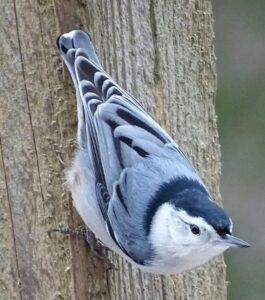
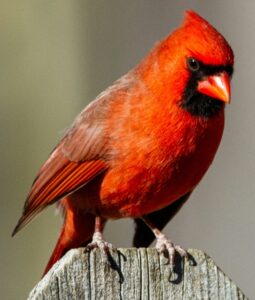
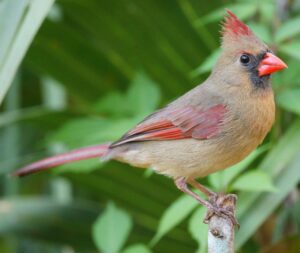
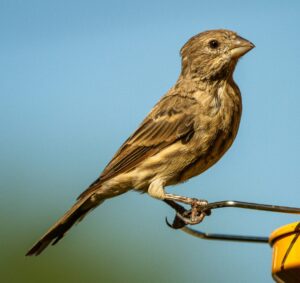
One is the White-breasted Nuthatches. There are 4. They seem to love having the feeders all to themselves. Watch for them – one at a time – upside-down on the hanging feeders – particularly the peanuts. We have a pair of Northern Cardinals and at least one very messy-looking juvenile. The House Finches and Mourning Doves are still here – just in greatly reduced numbers.
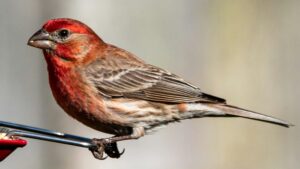
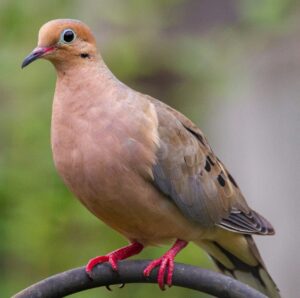
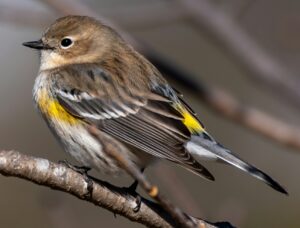
We do still have some Blue Jays but they are not much interested in the bird feeders right now. They are stuffing themselves with acorns, pecans, and hickories from our many huge trees. The crows are here but as far as I know still have not come for the corn nor to play with the rocks in the small feeder. Yellow-rumped Warblers are slowly migrating through but they rarely/never come to the feeders.
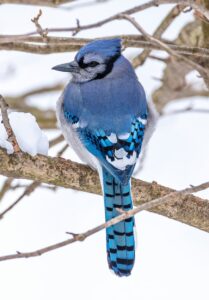
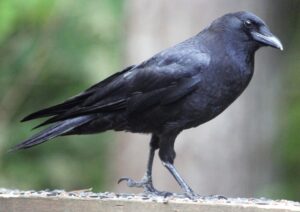
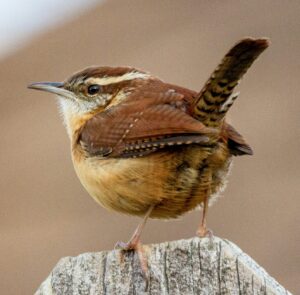
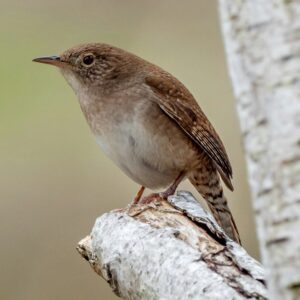
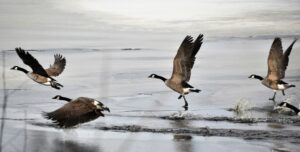
The Carolina Wrens have moved on – they may be back for the winter. But the House Wrens have migrated and we will not see them again until next spring. And if you have your sound on, in mid-late afternoons, small flocks of Canada Geese land on our lake just honking away! They are LOUD! Interestingly, in summer, some come to eat seed off the ground under the feeders. There have been no geese under our feeders for weeks. Why? The two paths they created for themselves through my pollinator border are still there. Could it be these are different geese???? Interesting.
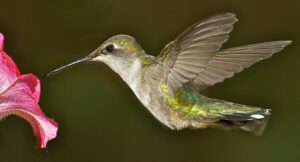
We have 4 Ruby-throated Hummingbirds still using the feeders and flowers – females and juveniles. And of course, fighting. I will keep the feeder up and filled through October to help any late migrators.
I will not be posting a blog next Sunday – October 11th. Cleon and I are travelling all next week – unfortunately not birding, but we always have our binoculars with us. You never know! We are spending time in French Lick, IN – the Hoosier National Forest – and then to Louisville, KY. And longtime, very good friends from Pennsylvania are joining us at both places.
Our good friend and helper Miles will be watching over our house, feeders, and watering all my pots while we are gone so you may see him on the livestreams. Interesting fact – Miles is a surgical technician at one of our large hospitals in Springfield. When things get rough and he has a break, he told me he always takes out his phone and tunes into the livestream of the bird feeders. Says it relaxes him to know there is a world away from the OR. I love that!
I will be back in two weeks! Till then – Happy Birding! Linda
*’local managers’ – Nowhere in this press statement is this term defined. Who are these people? Elected officials who may or may not know anything at all about trees or grasslands? The only work with trees they ever do is to mow around them in their yards? Are they owners of logging companies? Are they hired foresters? And if hired, who is paying their salaries? The local governments or logging companies? I could not find ‘local managers’ clearly defined anywhere. If you find a good definition of what this term refers to in this press release, please let me know and I will post the information and where you obtained it. The definition is truly important. Just who are these people going to be?
**North American Breeding Bird Survey – here is more information: NA Breeding Bird Survey
***State of the Birds – here is more information: State of the Birds
****The Wilderness Act of 1964 – here is an update of this act from the Congressional Research Service dated October 12, 2022: Updated Interpretations for Congress of the Wilderness Act of 1964
And what is the Congressional Research Service? Click here: Congressional Research Service