

Birds on a wire – flocking up in late summer…..
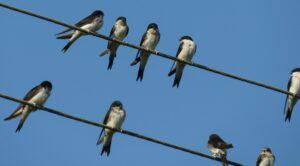
This is a great time of year to throw your binoculars around your neck and take a walk or drive anywhere there are overhead utility wires. It does not matter if you are in town, the suburbs, or rural. This is the time of year you will see more and more birds sitting together side-by-side on these wires. Flocks are forming. Some of these flocks will remain where they are for the fall and winter and some flocks will migrate. These flocks will break up in late winter or early spring, then mating begins, families will be raised, and these same flocks will start to form again in August next year.
If you see birds together on an overhead wire and it is safe, pull your car over and stop – or if you are walking, find a good place to sit or lean. Spend some time looking at these birds through your binoculars and watch how they behave. These are not quiet, docile birds. You will see all sorts of small movements and interactions. A bit of pushing and shoving – sometimes birds will actually get pushed off. Birds will snap their beaks at each other. Fluff their wings at each other. And sometimes even ‘talk’ to each other using their vocabulary of call notes – not song. And it appears that these wires are a great place to catch up on preening!
And why do birds congregate on overhead wires? There are lots of theories: safety from predators; a 360° view to the horizon – or at least a good distance; social benefits – being so close together allows for more communication between members of the flock; and sitting close together provides a sense of security. Whatever the reasons, there are species in which this is a common and seasonal occurrence so they must like it! And ask yourself – why do we human beings like to be in groups? We chat in social situations, we feel safer walking across dark parking lots at night, and we bond with friends and family. Whether it is groups of people, flocks of birds, schools of fish, or herds of horses, the reasons for being in a group are often the same regardless of what living creature it is. And there are always loners – and they have their reasons also. Some people just do not like the company of others – they prefer solitude – silence. Just like other living creatures: panda bears, swordfish, Great Horned Owls, and Belted Kingfishers.
And why aren’t birds electrocuted when they sit on working, live wires? Because they almost always stay on a single wire. If a bird touches two different wires or a wire and a grounded object at the same time (any of the other stuff on or around the utility pole), then the bird does what is known as ‘complete the circuit’ and it will be electrocuted. Sitting on one wire forms an incomplete circuit and the bird is safe.
If you watch a flock long enough you may see some birds arrive and some leave. Often, the entire flock will leave all at once – watch the flocks change shape and how each bird flies within the flock. Here are photos of a few of the common birds that flock up on these overhead wires right now – and for the next few weeks – until they either leave to migrate or decide where in your area they will spend the winter. They may never leave the area around that overhead wire. If the flock stays in your area for the entire winter, you may see it quite often perched on the same overhead wire.
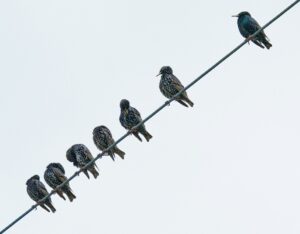
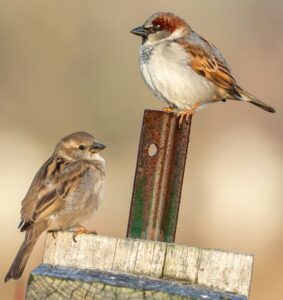
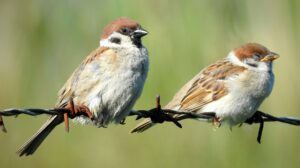
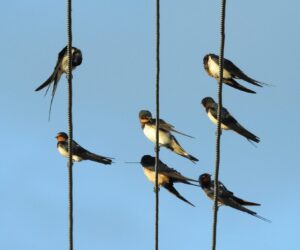
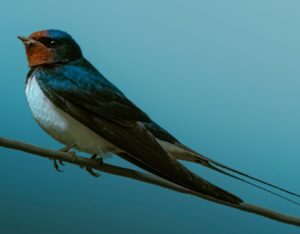
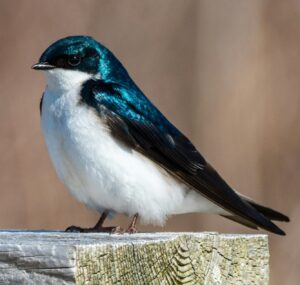
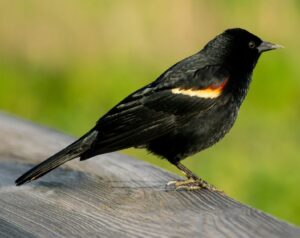
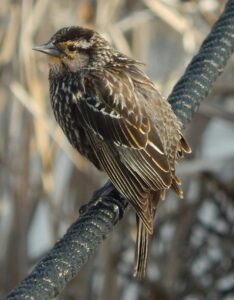
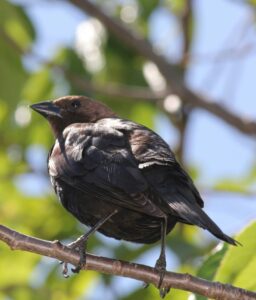
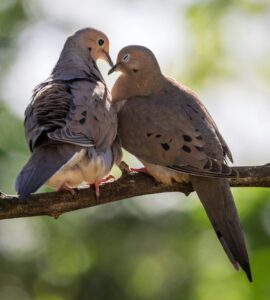
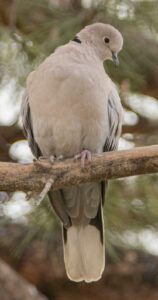
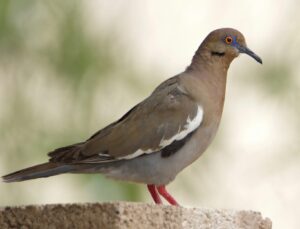
And birds that are not in flocks but from August through winter, you can see them on poles and overhead wires – generally by themselves:
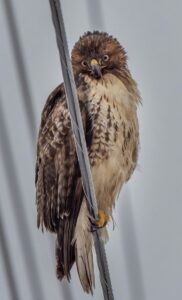
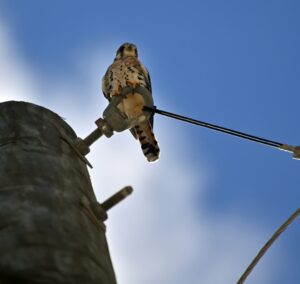
Since I ended with two raptors, I will remind you that from now through about mid-November is a great time to look for raptors**. They may not sit on wires or poles in flocks, but some do gather in groups to migrate – and they have started to migrate. There are other places to go to watch this migration, but I am most familiar with Cape May, New Jersey, and Hawk Mountain in Pennsylvania. Both places are outstanding for observing raptors – and other birds – in migration and there are expert birders right there to help you identify what you are observing. Another great place – especially for vultures – is the Hoosier National Forest in southern Indiana. Spend a couple of days at French Lick – Larry Bird’s hometown – or adjacent West Baden. Vultures are everywhere – lazily circling in the skies.
Also keep in mind that beginning now, songbirds are becoming more and more quiet. Some are molting. Some are sitting quietly and storing up fat for the winter. Some are resting from the energy-drain of nest building, egg laying, and family raising. If you notice birds are not coming quite as often to your feeders, that is normal. Some songbirds are preparing to leave your neighborhood and those who will come to your neighborhood for the winter have yet to arrive. So late August, September and October are more quiet times. You will also notice that on our livestreams.
If you are interested, here is a link to Cornell Laboratory of Ornithology. Experts are tracking nightly migration and here is last Monday night’s map. Where I live in central Illinois, migration is well underway – in your part of the country it may just be beginning or not yet started. Regardless of where you live, birds will be in flocks on overhead wires! Get out and look for yourself! Cornell Lab – nightly national migration map
Even the squirrels are lazing around a bit! Here is one of our fox squirrels – after spending time munching on a corn cob in the squirrel tower – relaxing in the sun on the rail that is at our deck steps.
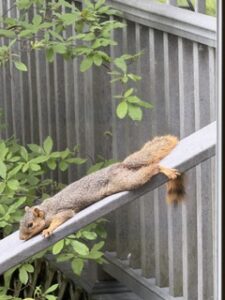
Cleon went back into the kitchen to get a coffee refill and here is the same squirrel a minute or so later…..
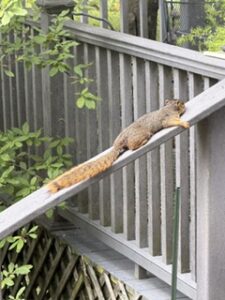
Blood rush to his head or what? You just never know what you will see when you look out your window…….
Happy birding! Linda
P.S. I added another plant to the Landscaping and Gardening for Birds and Wildlife section of this website. Horsemint (also called Spotted Bee Balm) – in my opinion – is an overlooked perennial which is great for a drier partly shaded area. There are not a lot of plants to choose from for this sort of growing condition. It is long-blooming and native! I have had this plant in every garden I have ever had and it is one of my favorites. If you are looking for a perennial you do not see everywhere, consider horsemint! Horsemint, Spotted Bee Balm, or Spotted Horsemint (Monarda punctata)
*House Sparrows and Eurasian Tree Sparrows are similar in appearance and behavior. Here is more information on how to tell one from the other: Eurasian Tree Sparrows and House Sparrows – Similarities and Differences
**I have written a guide to help you ID raptors – based on all the struggles I have had to ID raptors. They are not easy! Here is the link. Be sure to read the sample pages! Birding Beyond the Field Guide Series