

Wheeler National Wildlife Refuge near Decatur and Huntsville, Alabama
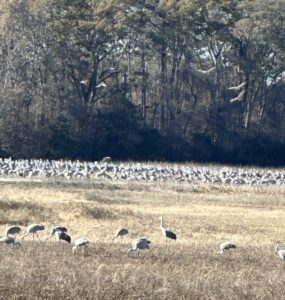
 This is a great place for watching Sandhill Cranes – up close and personal! And take a good look because there will probably be a few Whooping Cranes mixed right in.
Wheeler NWR is one of my favorite places for birds. Cleon and I have been here before and have always seen quite a few species, but what we really like is we see so many of certain species of waterfowl and wading birds. This is a great place to watch these birds interact with each other. Also to watch individual behavior such as foraging, preening, moving, resting.
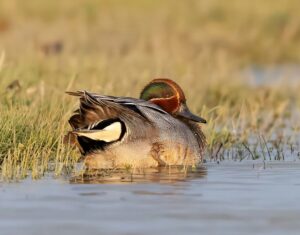
And because of the way this refuge is set up, you can get close to these birds – even the ones who normally are quite skittish like Green-winged Teals.
I have never been to a wildlife refuge that is set up better than this one for easy wildlife viewing. There are 2 good-sized blinds for viewing, photography, and filming. One is a small building and although it is not cooled or heated, it does protect you from the elements – sun, rain, and wind. And there are good-sized viewing openings both low and high so adults and children can comfortably look out. This building has been placed at the edge of the large area where thousands and thousands of Sandhill Cranes – intermixed with a few Whooping Cranes – come to rest and socialize all winter long. Here is one of the videos I shot from an opening from within this building: Sandhill Cranes 1. Keep your volume turned up to hear them. And you will hear what sounds like opening and shutting of something. That is the opening and closing of the slots from which everyone can view and photograph. Besides several other photographers, there was a mother with her young daughter – they stayed a long time just watching. The mother was speaking softly to her – I am guessing explaining. The little girl was quiet and very attentive. Love to see this!
Our list from this building blind:
Sandhill Cranes
Whooping Cranes
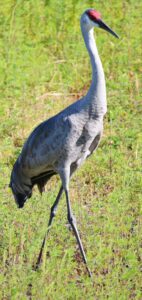
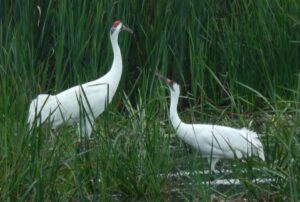
The second blind is actually a solid fence with openings at several different heights. This fence is at the edge of another area – smaller – where the cranes also congregate.
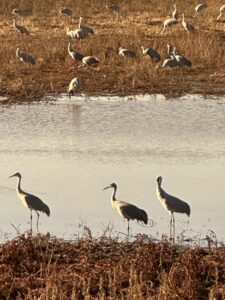
But I think the pièce de résistance is their “extra” building. Cleon and I have been to many national wildlife refuges all over the country and every one of them had a good viewing area for birds – most often it is of a feeder area which sometimes includes a bird bath. Occasionally it is a view out over a pond or small lake. These viewing areas are inside the Visitor’s Center and most often are a large wall of windows with close-by chairs or benches. Sometimes there is a sound system so you can hear the birds. Sometimes binoculars will be provided. But Wheeler is different – and in my opinion, so much better. Their wildlife viewing area is actually in a whole other building from their large Visitor’s Center. There is a smooth, fairly wide, and flat trail that leads from the Visitor’s Center and parking lot to this extra building. And it is a big building.
When you enter, there are windows through which you can see the pond on whose banks it is built. If you walk to the end of the entry hall, there are more windows that give you a slightly different view. But if you turn right as soon as you enter, you enter a very large room with a very tall ceiling. The entire wall overlooking the pond is floor to ceiling windows. You not only see the pond itself, and much of the grassland beyond, you also see a whole lot of sky. There are low bleachers along the wall – my guess is these would comfortably sit more than 2 dozen people with all their paraphernalia like binoculars, field guides, notebooks, and jackets. There is also a good scope which anyone can use. This viewing area is at the bank of the pond, and the ducks and geese are right in front of you and in good numbers. It is the best place I have ever been in for viewing waterfowl and waders up close. And these birds have no idea you are watching – they are just going about their lives and daily activities. You will get a close up look at foraging, preening, socializing. All in comfort. You can sit or stand. Walk around. The birds will never see your movement or hear your voice. Here is a video to show you just how great this viewing is. Consider keeping your volume off. Another mother talking softly to her 3 children – 2 boys and a girl. This family stayed quite some time in this viewing area – sitting on the bleachers – and enjoying all the birds. Click here: The pond – what a great view!
Our list from this viewing building:
Green-winged Teals – both male and female
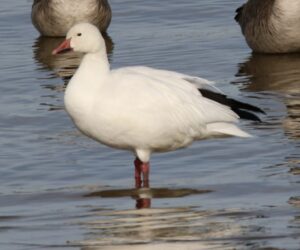
Snow Geese
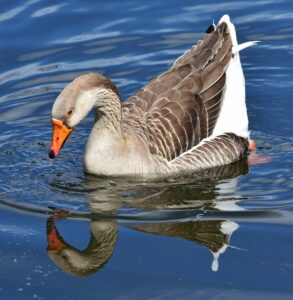
Greater White-fronted Geese
Canada Geese
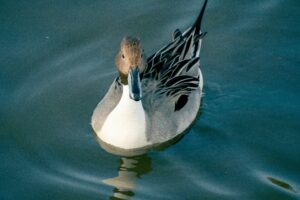
Northern Pintails – males and females
Northern Shovelers – males
Mallards -males and females
Redheads – 3 males
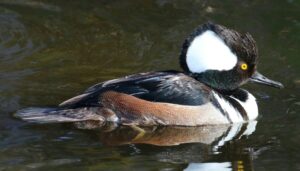
Hooded Mergansers – 3 males


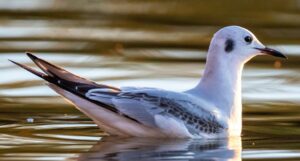
But this is not all there is. Across the state highway from the Visitors’ Center, these blinds, and the viewing building is another area with a large pond/small lake. We saw about a hundred American White Pelicans, a dozen Great Egrets, several Great Blue Herons, Ring-billed Gulls, and many Killdeer. But the best sighting for me was a small flock of Bonaparte’s Gulls. So buoyant when they fly – reminds me of terns!
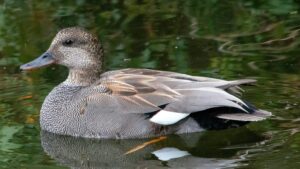
Up the road about half a mile and on the same side of the highway as the Visitors’ Center is a pull-off to another large pond/small lake and we saw Gadwalls. Dozens and dozens of Gadwalls. I have never seen this many Gadwalls all together in one spot. What a sight! Every duck you see in this short video is a Gadwall! And I suggest you keep your volume off. This pull-off is close to the state highway so there is much traffic noise. And this is a subject for a future blog – noise pollution! Click here for the video: Gadwalls
And still not finished. Wheeler sprawls out over 35,000 acres. You can obtain a map at the Visitors’ Center and assistance as to where to go and what you might see. This refuge is a haven for waterfowl and cranes, and the refuge manages and protects habitats for 13 federally listed and endangered or threatened species – including the endangered Whooping Crane. The habitats within this refuge are diverse. Quoting from their brochure: “Bottomland hardwoods, wetlands, pine uplands, shoreline or riparian woodlands, agricultural fields, and back water embayments.” We asked for advice at the Visitor’s Center, and they could not have been more helpful or friendly. We got good driving instructions to a trail plus had a wonderful conversation with several people working behind the desk – all filled with laughter. The experience could not have been better. And that is another thing I love about this refuge. Whether you are dealing with someone who works for the U.S. Fish and Wildlife Services – who oversees all these refuges – or a volunteer, everyone is always knowledgeable about the entire refuge and what you might see. They are friendly and accommodating. Right away you know they all love their jobs and want you to have a great experience. Not all wildlife refuges have such friendly, talented, and knowledgeable staff and volunteers. Sometimes there is no one around to answer questions and sometimes it is just a volunteer to man the desk and all the person can do is give you a brochure or direct you to the facilities. But Wheeler is different. Very different. These folks KNOW!
It was explained to us there might not be a great many songbirds on the trails this time of year, but we were directed to the Beaverdam Swamp Boardwalk Trail. The parking area for the trail was just on the other side of the guardrail for I-565 so as you can imagine, the first part of this 1-mile trail was noisy. But once we were about 100 yards down the trail, the noise of the interstate receded until we did not hear anything at all. This trail is flat and well maintained. The first part has a surface of crushed granite which leads to the boardwalk. The boardwalk trail winds its way through the swamp until it ends at a viewing area at a stream. The trees are mostly black tupelo – beautiful trunks and bark.
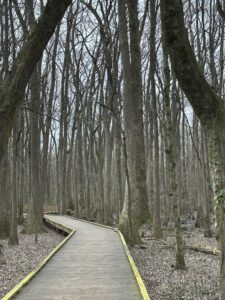

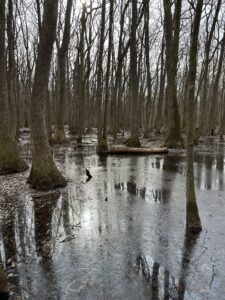
Birds seen and heard on this boardwalk trail:
Red-bellied Woodpecker
Hairy Woodpecker
Downy Woodpecker
Pileated Woodpecker
Northern Flicker
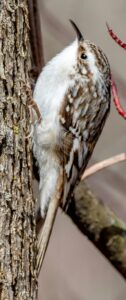
Brown Creeper
Tufted Titmouse
Carolina Chickadee
Yellow-rumped Warblers
American Robin
Northern Mockingbird
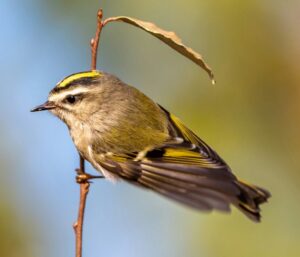
Golden-crowned Kinglet
Eastern Phoebe
Chipping Sparrows
White-throated Sparrows – brown and tan morph – both of these sparrows were seen at the edge of this habitat where it was much drier and shrubbier
Bewick’s Wren
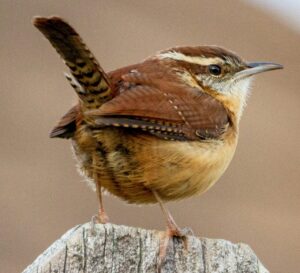
Carolina Wren
Winter Wren
Photos of the less common of these songbirds:
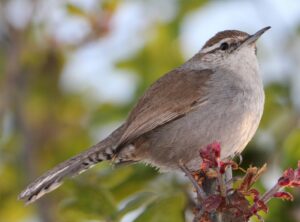
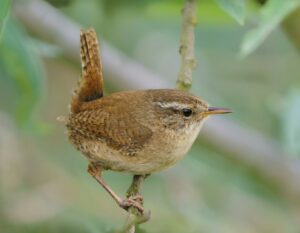
Over the entire refuge, this was the count for ONE DAY in mid-December for ducks, geese, and cranes:
Ducks: 14,293
Geese: 1628
Sandhill Cranes: 10,497
Whooping Cranes: 10
Wow!
If you live near northern Alabama or are looking to get away for a weekend, consider booking a trip to either Decatur or Huntsville, AL. Both have good places to stay and great restaurants – always a must when birding far from home! January 9-11 of 2026 – two weekends from now – Wheeler is having their Festival of Cranes. Two great days of crane watching plus wonderful speakers and activities are planned. Here is a sample:
Anne Lacey – Building Blocks of Crane Behavior
Paul Bannick – Woodpecker: A Year in the Lives of North American Woodpeckers
Amber Coger – 2 separate talks: Cranes can dance? and Delicate Dancers and Fierce fighters: The Natural History of Cranes
Jessie Taylor – Crane habitats
Jimmy Stiles – Live herpetology Presentation
Wings to Soar – A Live Raptor show
Michael Forsberg – 2 separate talks: Into Whooperland – A Photographer’s Journey, and Workshop: Writing with Light
Tracy Roberts McCann – Painting workshop (there will be a charge for this)
Timothy Joe – Mini Watercolor Journal Workshop (there will be a charge for this)
Dr. Lauren McGough – 2 separate talks: The Albatross of Midway Atoll and How to Befriend an Eagle
Dr. Andy Caven – An issue of scale
Donald Hood – Photography Tips
And this is not all – there is so much more! Call for more information at 256-350-6639. And if you are unable to get to this festival, mark your calendars for January of 2027! For your GPS: 3121 Visitor Center Road, Decatur, AL – this will take you right to the Visitor’s Center parking lot.
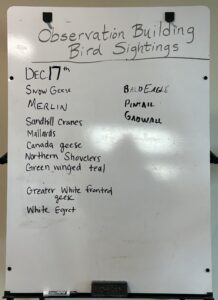
Here is our complete list for a wonderful day at Wheeler!
Sandhill Crane
Whooping Crane
Snow Geese
Greater White-fronted Geese
Canada Geese
Green-winged Teal
Northern Pintail
Northern Shoveler
Mallards
Gadwalls
Redhead
Hooded Mergansers
Great Egret
American White Pelicans
Great Blue Heron
Herring Gull
Ring-billed Gulls
Bonaparte’s Gull
Killdeer
Tufted Titmouse
Carolina Chickadee
Yellow-rumped Warblers
Golden-crowned Kinglet
American Robin
Northern Mockingbird
Eastern Phoebe
Chipping Sparrows
White-throated Sparrow – brown and tan morph
Bewick’s Wren
Carolina Wren
Winter Wren
Northern Flicker
Brown Creeper
Red-bellied Woodpecker
Hairy Woodpecker
Downy Woodpecker
Pileated Woodpecker
This was just a perfect day!